Machine learning enables AI systems to learn patterns from data and make predictions or decisions instead of following a separate fixed rule for every case. Its outputs remain probabilistic: a system might estimate a 72% chance that a customer will purchase a product. section 1.2
Machine learning commonly takes three forms:
- Unsupervised learning finds patterns and structures in unlabeled data. section 1.5
- Supervised learning learns from labeled examples to predict outcomes. section 1.5
- Reinforcement learning interacts with an environment, using trial and error to pursue goals. section 1.5
From language patterns to conversation
ChatGPT illustrates a staged machine-learning system. GPT first predicts likely next words through unsupervised learning; later supervised and reinforcement-learning steps refine its ability to sustain human conversations. section 1.5
Figure 1.5 The three types of machine learning: unsupervised, supervised, and reinforcement
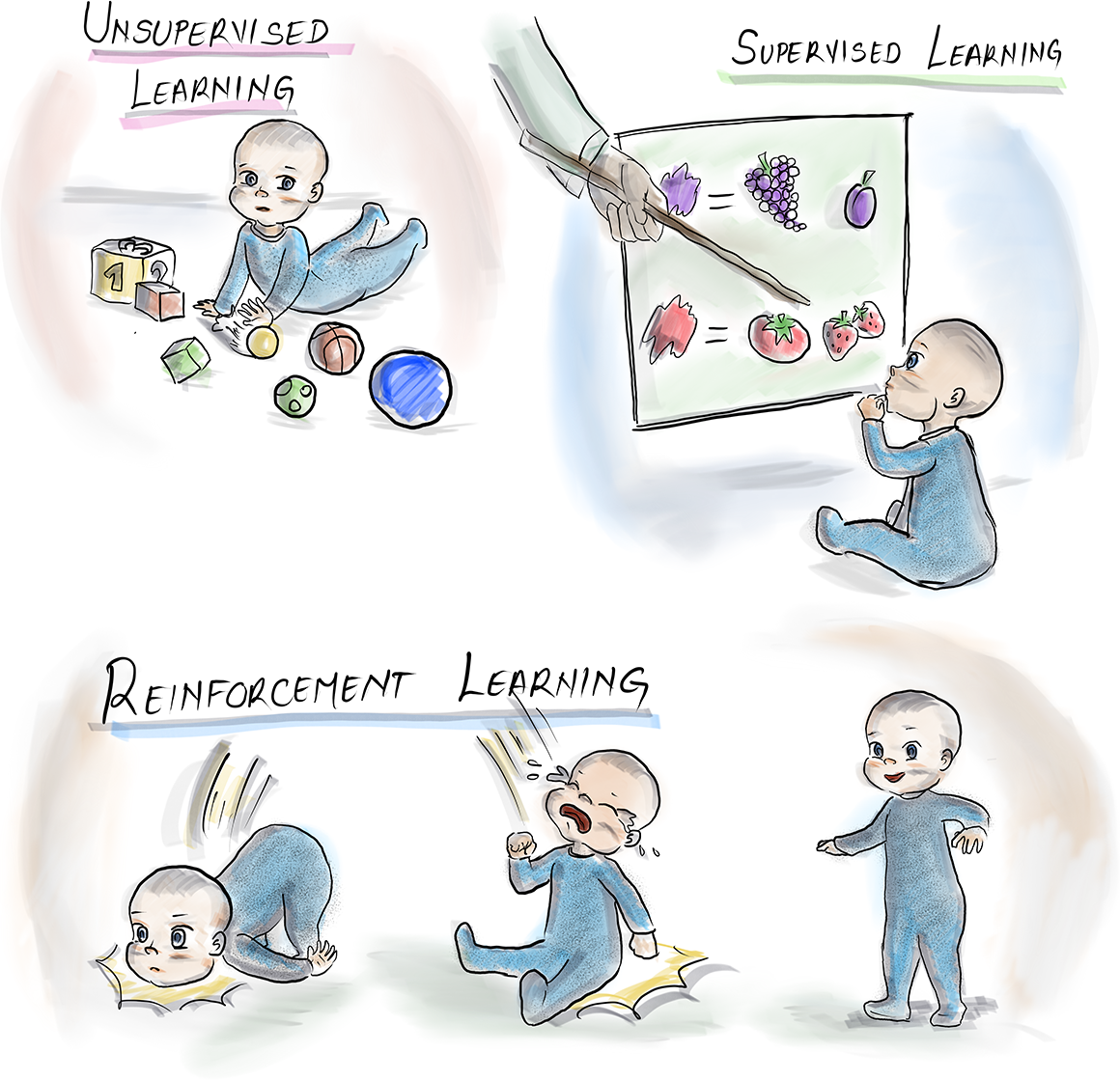
Compare unsupervised, supervised, and reinforcement learning in one visual overview. section 1.5









































