Machine learning is a subfield of artificial intelligence that enables computers to learn from examples, discover patterns, and improve predictions or decisions without receiving every instruction line by line. section 4.1.1 section 4.1.2
From outfit descriptions to predictions
To assess whether an outfit is fashionable, collect and label outfit descriptions and fashion elements. Training uses these examples to learn patterns, after which the model predicts whether new outfits are fashionable. section 4.1.2
A typical supervised-learning workflow includes:
- Define the problem and collect labeled data. section 4.1.2
- Extract input features representing the attributes the model will analyze. section 4.1.2
- Train an algorithm to map features to labels while reducing prediction errors. section 4.1.2
- Use the trained model to classify or predict unseen instances. section 4.1.2
Supervised learning uses labeled examples, while unsupervised learning identifies structure without the same labeled-output setup. Common supervised applications include image classification, sentiment analysis, spam detection, and speech recognition. section 4.1.2
Figure 4.1 The main subfields of AI, with a focus on generative AI
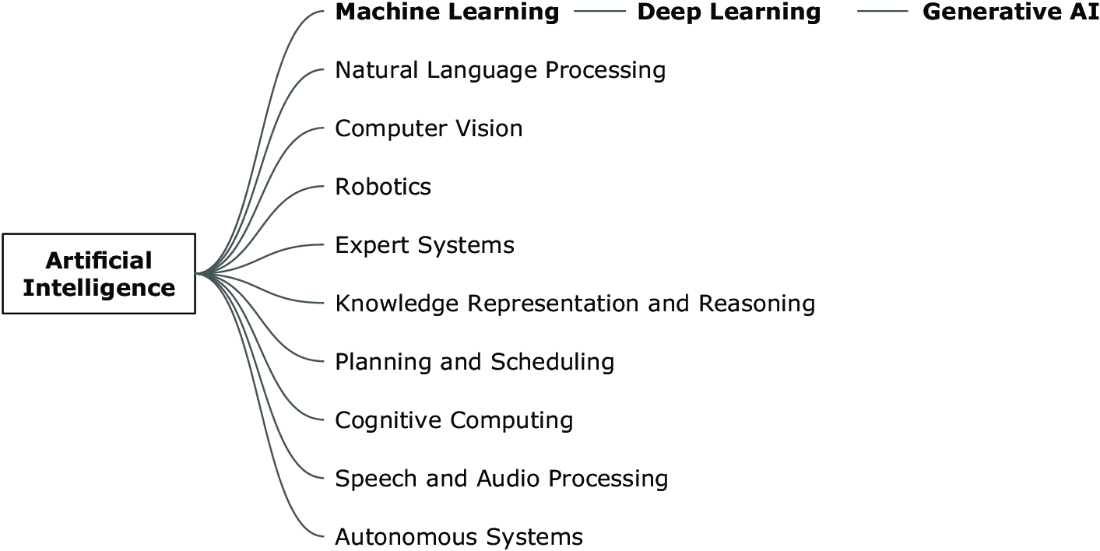
Use the hierarchy to place machine learning beneath artificial intelligence and above deep learning and generative AI. section 4.1.1
Figure 4.2 An example of a classification model
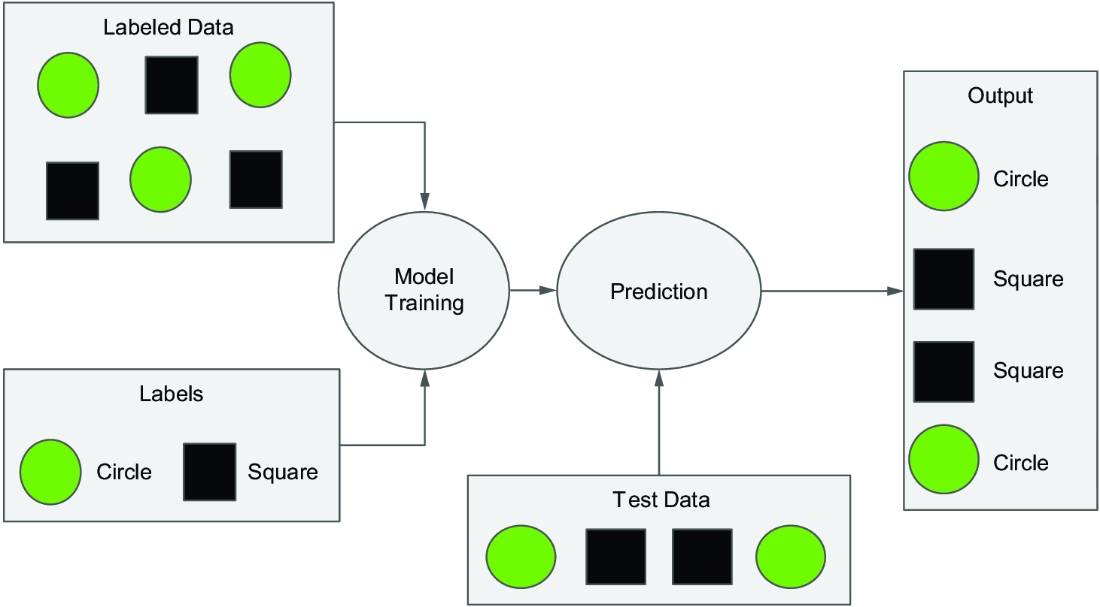
Use the classification model figure to visualize assigning new instances to learned categories. section 4.1.2
Figure 4.3 An example of a clustering model
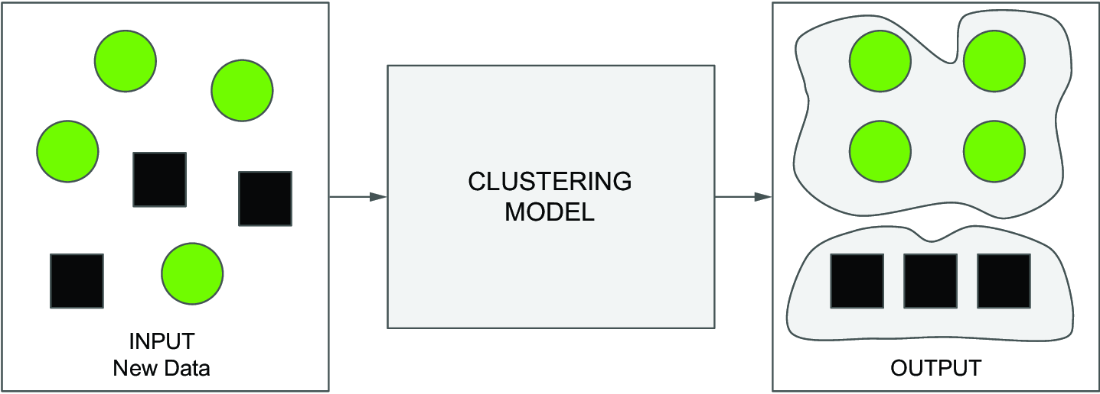
Use the clustering model figure to visualize structure discovered through unsupervised learning. section 4.1.2









































