Supervised learning
Supervised learning is a machine-learning approach that learns predictive relationships from examples paired with known target outputs or labels.

Optimization Algorithms: AI techniques for design, planning, and control problems
Supervised learning is a machine-learning paradigm in which a model learns mappings from inputs to labeled target outputs.
- How it is used
- Uses labeled prediction for classification and for learning solutions to optimization problems.
- How deep it goes
- Develops training and inference from loss-based learning through neural-network and graph-optimization implementations.
- Examples
- Uses penguin species classification, traveling salesperson tours, and convex hull prediction.
- What you can do after
- Apply it via PyTorch and pretrained graph models to predict optimization solutions and evaluate convex hull predictions.
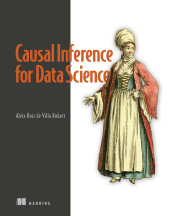
Causal Inference for Data Science
Supervised learning is a machine-learning approach that learns a mapping from inputs to labeled outputs.
- How it is used
- Supports forecasting and automated decisions by predicting outcomes from historical inputs, and estimates conditional probabilities within adjustment formulas.
- How deep it goes
- Defines training data, model families, classification, regression, conditional expectations, distribution assumptions, and cross-fitting cautions without deriving causal identification.
- Examples
- Uses sales forecasting, spam identification, COVID-19 ICU triage, and dog-versus-fish image classification to illustrate prediction and failure modes.
- What you can do after
- Evaluate/understand whether a predictive model fits a stable forecasting task or requires causal reasoning about interventions.
Read how Causal Inference for Data Science explains supervised learning →

Financial AI in Practice
Supervised learning trains models on labeled examples to predict outputs for new inputs.
- How it is used
- Scores individual transactions for known fraud patterns using labeled historical outcomes.
- How deep it goes
- Develops a practical pipeline from labeled data and imbalance remedies through tuning, testing, and operational evaluation.
- Examples
- Uses labeled fraud transactions, legitimate travel behavior, and a LightGBM classifier trained with SMOTE.
- What you can do after
- Apply it via LightGBM and imblearn to classify fraud and evaluate alerts against review capacity.
Read how Financial AI in Practice explains supervised learning →

Investing for Programmers
A machine-learning approach that trains a model from examples paired with known target outcomes.
- How it is used
- Deploys labeled financial data to forecast prices, returns, stock success, or trading outcomes.
- How deep it goes
- Descends from labels and features through dataset construction, model training, testing, error measurement, and forecasting limitations.
- Examples
- Uses clustered stock labels, macroeconomic features, and an AAPL random-forest next-day price experiment.
- What you can do after
- Apply it via pandas, yfinance, and scikit-learn to train, test, evaluate, and visualize financial predictions.
Read how Investing for Programmers explains supervised learning →
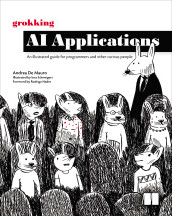
Grokking AI Applications
Supervised learning is a machine learning approach that learns to predict outcomes from labeled examples.
- How it is used
- Frames supervised learning as the labeled-data stage that refines model outputs for specialized tasks and human conversations.
- How deep it goes
- Explains labeled examples and parameter adjustment through backpropagation-like passes, without detailing neural-network internals.
- Examples
- Uses child-guided color learning, prompt-and-completion datasets, and GPT conversational fine-tuning as examples.
- What you can do after
- Apply supervised learning to fine-tune a pretrained model with prompts and desired completions.
Read how Grokking AI Applications explains supervised learning →

Math and Architectures of Deep Learning
A learning setting where training examples include known target outputs used to guide parameter estimation.
- How it is used
- Frames model training as learning from labeled input-output pairs before inference on new inputs.
- How deep it goes
- Explains labeling, parameter adjustment, and deployment, but stops short of specifying a loss function or optimization algorithm.
- Examples
- Uses a weighted-sum threat estimator with hardness and sharpness inputs, numeric target corrections, and approach, ignore, or run-away decisions.
- What you can do after
- Apply it by constructing labeled training pairs, adjusting model parameters toward targets, and using the trained model for inference.
Read how Math and Architectures of Deep Learning explains supervised learning →
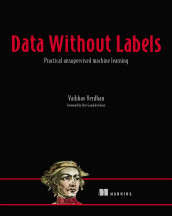
Data Without Labels
Supervised learning is a machine-learning paradigm in which models learn from input data paired with desired outputs to predict outputs for unseen data.
- How it is used
- Uses labeled historical data to predict future outcomes in tasks such as demand prediction, fraud detection, and customer churn.
- How deep it goes
- Defines training examples and targets, distinguishes regression from classification, and illustrates models with plots and equations rather than a training workflow.
- Examples
- Uses height-to-weight regression, telecom churn records, and face images paired with names.
- What you can do after
- Evaluate/understand whether a labeled prediction problem calls for regression or classification based on its target.

Grokking Machine Learning
A machine-learning approach that learns from labeled data to predict labels for previously unseen data.
- How it is used
- Uses labeled examples to predict labels for unseen data in applications such as image recognition, text processing, and recommendation systems.
- How deep it goes
- Defines the labeled-data workflow and regression-classification split, but stops before specific algorithms or implementation details.
- Examples
- Uses pet images labeled dog or cat, pet weights, housing prices, spam emails, and fraudulent transactions.
- What you can do after
- Evaluate and understand how labeled examples support numerical regression and categorical classification predictions.
Read how Grokking Machine Learning explains supervised learning →

The AI Pocket Book
A machine-learning approach where the model learns from labeled examples showing the desired task behavior.
- How it is used
- Frames machine learning as learning task behavior from labeled examples, including language prediction, image categorization, and image reconstruction.
- How deep it goes
- Defines input-label training pairs and discusses generalization, overfitting, and labeling costs, without descending into optimization or model internals.
- Examples
- Uses next-token pairs, labeled images, and corrupted-image reconstruction with captions as concrete training examples.
- What you can do after
- Evaluate whether a model learns general task behavior or merely memorizes labeled training examples.

Build AI Drug Discovery Pipelines
Supervised learning trains a model from examples paired with target labels or values.
- How it is used
- Frames drug-discovery prediction as learning from labeled molecular data for toxicity and activity screening.
- How deep it goes
- Explains labels, molecular representations, weight updates, inference, and generalization, but stops short of a specific algorithm or implementation.
- Examples
- Uses toxicity labels and hERG-blocking compounds as concrete classification examples.
- What you can do after
- Apply it to train classifiers that predict molecular properties for previously unseen compounds.
Read how Build AI Drug Discovery Pipelines explains supervised learning →
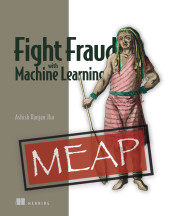
Fight Fraud with Machine Learning
Supervised learning is machine learning in which a model learns from input examples paired with target outputs or labels.
- How it is used
- Fine-tunes a pre-trained GPT model to answer prompts using manually labeled question-and-answer pairs.
- How deep it goes
- Explains paired X–y data and its role between pre-training and reinforcement learning, without describing the fine-tuning algorithm.
- Examples
- Uses ChatGPT fine-tuning with manual-labeler questions as inputs and corresponding answers as outputs.
- What you can do after
- Evaluate/understand how labeled question-answer pairs make a pre-trained GPT model respond to prompts.
Read how Fight Fraud with Machine Learning explains supervised learning →

The Art of AI Product Development
Supervised learning is machine learning in which a model learns a mapping from inputs to explicitly labeled targets.
- How it is used
- Deploys labeled examples to solve predictive problems, especially classification in user-facing products.
- How deep it goes
- Explains labels, dataset creation, model choice, interpretability, and function fitting while flagging overfitting and underfitting.
- Examples
- Uses sentiment labels, animal-image labels, next-word prediction, and behavioral user segments as concrete input-target examples.
- What you can do after
- Build models that predict explicit labels from input features and choose interpretable approaches when stakeholders must act on outputs.
Read how The Art of AI Product Development explains supervised learning →
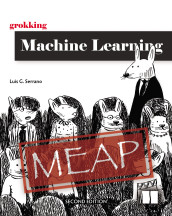
Grokking Machine Learning, Second Edition
A machine-learning approach in which a model learns from labeled examples containing inputs and corresponding target outputs.
- How it is used
- Uses labeled examples to predict targets in applications such as image recognition, text processing, and recommendation systems.
- How deep it goes
- Defines labels, explains the prediction workflow, and distinguishes regression from classification without developing specific algorithms.
- Examples
- Uses pet-image labeling, housing prices, stock prices, spam detection, fraud detection, recommendations, and voice decoding.
- What you can do after
- Evaluate whether a problem is supervised, then select regression or classification for its target.
Read how Grokking Machine Learning, Second Edition explains supervised learning →

Outlier Detection in Python
A machine learning paradigm in which models learn from data accompanied by labels.
- How it is used
- Frames prediction as learning from labeled records, images, documents, measurements, or audio data.
- How deep it goes
- Explains labels, classification, and regression, then addresses classifier benefits and contamination risks without covering training internals.
- Examples
- Uses labeled animal images, numeric image-quality labels, flagged records, shallow decision trees, and converted rules.
- What you can do after
- Build predictors from labeled data and evaluate when classifiers or interpretable rules can support outlier detection.
Read how Outlier Detection in Python explains supervised learning →

Classic Computer Science Problems in Swift: Essential techniques for practicing programmers
Supervised learning is a machine-learning approach that learns from inputs paired with known target outputs.
- How it is used
- Trains neural networks by comparing expected and actual outputs, then modifying weights during training.
- How deep it goes
- Explains error calculation, deltas, and weight updates, but defers the calculus derivation of partial derivatives.
- Examples
- Uses neural-network output errors, output-layer deltas, hidden-layer deltas, and weight updates as worked mechanisms.
- What you can do after
- Evaluate/understand how labeled examples drive neural-network error calculation and weight adjustment.

Cyber Threat Hunting
Supervised machine learning learns a mapping from labeled examples to predictions or decisions.
- How it is used
- Applies labeled DNS traffic to predict tunneling and generate threat-hunting clues.
- How deep it goes
- Defines labels, ground truth, features, and training-data constraints while treating Random Forest and XGBoost only at a high level.
- Examples
- Uses Zeek DNS events and a labeled domain-name data set containing regular traffic and four tunneling-tool classes.
- What you can do after
- Apply it via Random Forest or XGBoost to investigate DNS tunneling when reliable labeled data is available.
Read how Cyber Threat Hunting explains supervised learning →

Machine Learning Algorithms in Depth
A machine learning algorithm that learns from examples pairing inputs with desired outputs.
- How it is used
- Uses input–output examples to learn rules for predicting labels on new inputs.
- How deep it goes
- Defines labeled datasets, parameterized predictions, and classification loss; points toward from-scratch derivations and implementations of selected classifiers.
- Examples
- Uses misclassification rate and stock-price prediction to distinguish tasks, then names email spam detection and document classification as applications.
- What you can do after
- Build from scratch selected classification algorithms, including the perceptron, support vector machine, and decision tree.
Read how Machine Learning Algorithms in Depth explains supervised learning →
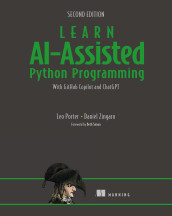
Learn AI-Assisted Python Programming, Second Edition
Supervised learning is a machine-learning approach that learns from examples paired with categories or target outputs.
- How it is used
- Frames authorship identification as a prediction task using known authors and measurable writing features.
- How deep it goes
- Defines labeled training data, feature calculation, learning, and prediction, but does not detail model internals.
- Examples
- Uses book texts, authors, average word length, average words per sentence, and sentence complexity.
- What you can do after
- Apply labeled examples and calculated features to predict the author of a previously unseen book.
Read how Learn AI-Assisted Python Programming, Second Edition explains supervised learning →

Acing the CCNA Exam: Volume 2 Advanced Networking and Security
Supervised learning is a machine-learning approach that trains an algorithm on examples paired with known labels.
- How it is used
- Trains algorithms to learn input-label relationships for tasks such as recognizing categories in data.
- How deep it goes
- Defines labeled training and contrasts learning approaches, but stops short of algorithmic implementation or evaluation procedures.
- Examples
- Uses thousands of labeled cat and dog photographs to demonstrate image classification.
- What you can do after
- Evaluate/understand how labeled examples enable algorithms to distinguish categories.

Introduction to Generative AI, Second Edition
Supervised learning is machine learning in which training examples include desired outputs or labels.
- How it is used
- Frames supervised learning as a foundational approach for learning patterns from labeled examples in natural-language tasks.
- How deep it goes
- Defines labeled input-output learning and contrasts learning signals, but stops short of implementation details or model internals.
- Examples
- Uses machine translation and thousands of translated documents as examples of labeled training data.
- What you can do after
- Evaluate supervised learning by identifying its labels, objectives, data requirements, and differences from alternative learning approaches.
Read how Introduction to Generative AI, Second Edition explains supervised learning →

Advanced Algorithms and Data Structures
Supervised learning is machine learning in which a model is trained from examples paired with labels or target values.
- How it is used
- Frames prediction as learning a model from labeled data for classification or regression.
- How deep it goes
- Defines labels, targets, model choice, and generalization, but stops short of detailed training procedures.
- Examples
- Uses object detection and goods-price estimation as classification and regression examples.
- What you can do after
- Evaluate/understand how labeled examples support models that predict outputs for previously unseen inputs.
Read how Advanced Algorithms and Data Structures explains supervised learning →
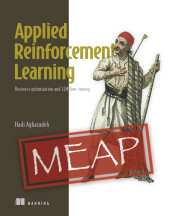
Applied Reinforcement Learning
A machine-learning technique that learns mappings from inputs to target outputs using labeled examples.
- How it is used
- Uses labeled input-output examples to teach prediction, and provides a foundation for supervised fine-tuning.
- How deep it goes
- Defines learning from labeled examples and details token-level training on ideal assistant responses.
- Examples
- Uses churn and fraud prediction, plus medical chatbot query-response pairs, to illustrate labeled learning.
- What you can do after
- Apply labeled examples to learn input-output mappings and predict outcomes on unseen cases.
Read how Applied Reinforcement Learning explains supervised learning →
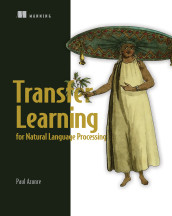
Transfer Learning for Natural Language Processing
Supervised learning is a machine-learning paradigm in which a model learns from examples annotated with output labels.
- How it is used
- Trains NLP systems from labeled examples to learn input-to-output transformations.
- How deep it goes
- Defines the labeled-data process and its generalization goal, then notes distribution-shift drawbacks without detailing algorithms.
- Examples
- Uses manually labeled positive and negative sentences or documents for sentiment analysis.
- What you can do after
- Understand how labeled data supplies a learning signal and why changed input distributions can hurt performance.
Read how Transfer Learning for Natural Language Processing explains supervised learning →
Statistics Every Programmer Needs
Supervised learning is a machine-learning approach that learns a mapping from inputs to known target outcomes using labeled examples.
- How it is used
- Uses labeled examples to predict quantitative or categorical outcomes for new data.
- How deep it goes
- Defines the learning setup and links it to regression, classification, and evaluation, but does not develop a general algorithm.
- Examples
- Uses sales, home prices, student performance, product demand, decision trees, and random forests as prediction examples.
- What you can do after
- Apply it via regression, decision trees, or random forests to predict outcomes and evaluate generalization on test data.
Read how Statistics Every Programmer Needs explains supervised learning →
Also covered in
- Digital Twins in Action
- Data Storytelling with Altair and AI
- Demand Forecasting Best Practices
- Inside AI
- Deep Learning with PyTorch, Second Edition
- Knowledge Graphs and LLMs in Action
- Deep Learning with JAX
- Grokking AI Algorithms, Second Edition
- Build a DeepSeek Model (From Scratch)In early access (MEAP)
- Elasticsearch in Action, Second Edition
- Privacy-Preserving Machine Learning
- Deep Learning with Python, Third Edition
What to know first
- language modelA language model is a computational model that represents patterns in linguistic sequences to assign probabilities, predict, generate, or evaluate language.
- machine learningMachine learning is a field of computational methods in which systems learn patterns or relationships from data to make predictions, decisions, or other outputs.
- accuracyAccuracy is the degree to which a result agrees with a specified truth, reference, or criterion, commonly measured as the proportion of evaluated predictions that are correct.
- artificial intelligenceArtificial intelligence is the field of computing concerned with creating systems that perform tasks associated with intelligence, such as learning, reasoning, perception, and decision-making.
Related concepts
- machine learningkind of · Machine learning is a field of computational methods in which systems learn patterns or relationships from data to make predictions, decisions, or other outputs.
- unsupervised learningcontrasts with · Unsupervised learning is a machine-learning approach that discovers patterns, structure, or representations in data without labeled target outputs.
- labeled datauses · Labeled data is a collection of examples paired with target values, categories, or other task-relevant annotations.
- RLHFused by · Reinforcement learning from human feedback is a model-training approach that uses human evaluations or preferences as feedback to optimize model behavior.
- linear regressionincludes · Linear regression is a statistical method that models a numeric response as a linear function of one or more predictor variables with fitted parameters.
- classifierincludes · A classifier is a predictive model that assigns an input to one or more discrete classes or categories.
Questions about supervised learning
What is supervised learning?
Supervised learning is a machine-learning approach that learns predictive relationships from examples paired with known target outputs or labels.
Which Manning books explain supervised learning?
Optimization Algorithms: AI techniques for design, planning, and control problems, Causal Inference for Data Science, Financial AI in Practice, Investing for Programmers, Grokking AI Applications, Math and Architectures of Deep Learning, Data Without Labels, Grokking Machine Learning and 16 more.
What should I know before learning supervised learning?
Manning books that teach supervised learning usually introduce language model, machine learning, accuracy and artificial intelligence first.
What is the difference between supervised learning and unsupervised learning?
Supervised learning is a machine-learning approach that learns predictive relationships from examples paired with known target outputs or labels. Unsupervised learning is a machine-learning approach that discovers patterns, structure, or representations in data without labeled target outputs.
What kinds of supervised learning are there?
Kinds of supervised learning include linear regression and classifier.
What is supervised learning a kind of?
Supervised learning is a kind of machine learning. Machine learning is a field of computational methods in which systems learn patterns or relationships from data to make predictions, decisions, or other outputs.
These guides are generated from the text of Manning books by Manning's knowledge graph and link to the sections they draw on. The full books are available on liveBook and at manning.com.