Supervised learning predicts outcomes by learning from labeled examples: given past inputs and desired answers, a model adjusts its behavior toward those answers. It contrasts with unsupervised learning, which discovers patterns without labels, and reinforcement learning, which improves through trial and error. section 1.5
A typical supervised-learning workflow for fine-tuning a pretrained model includes:
- Provide numerous prompts together with their desired completions. section 1.6
- Run learning passes that adjust the neural network’s parameters toward the desired completions. section 1.6
- Use the resulting model for more specialized tasks, knowledge, or human dialogue. section 1.6
Fine-tuning a conversational model
A pretrained GPT model can learn better conversational behavior from many prompt-and-completion examples. Supervised training refines its initial output so it follows instructions and sustains dialogue more effectively. section 1.6
Figure 1.5 The three types of machine learning: unsupervised, supervised, and reinforcement
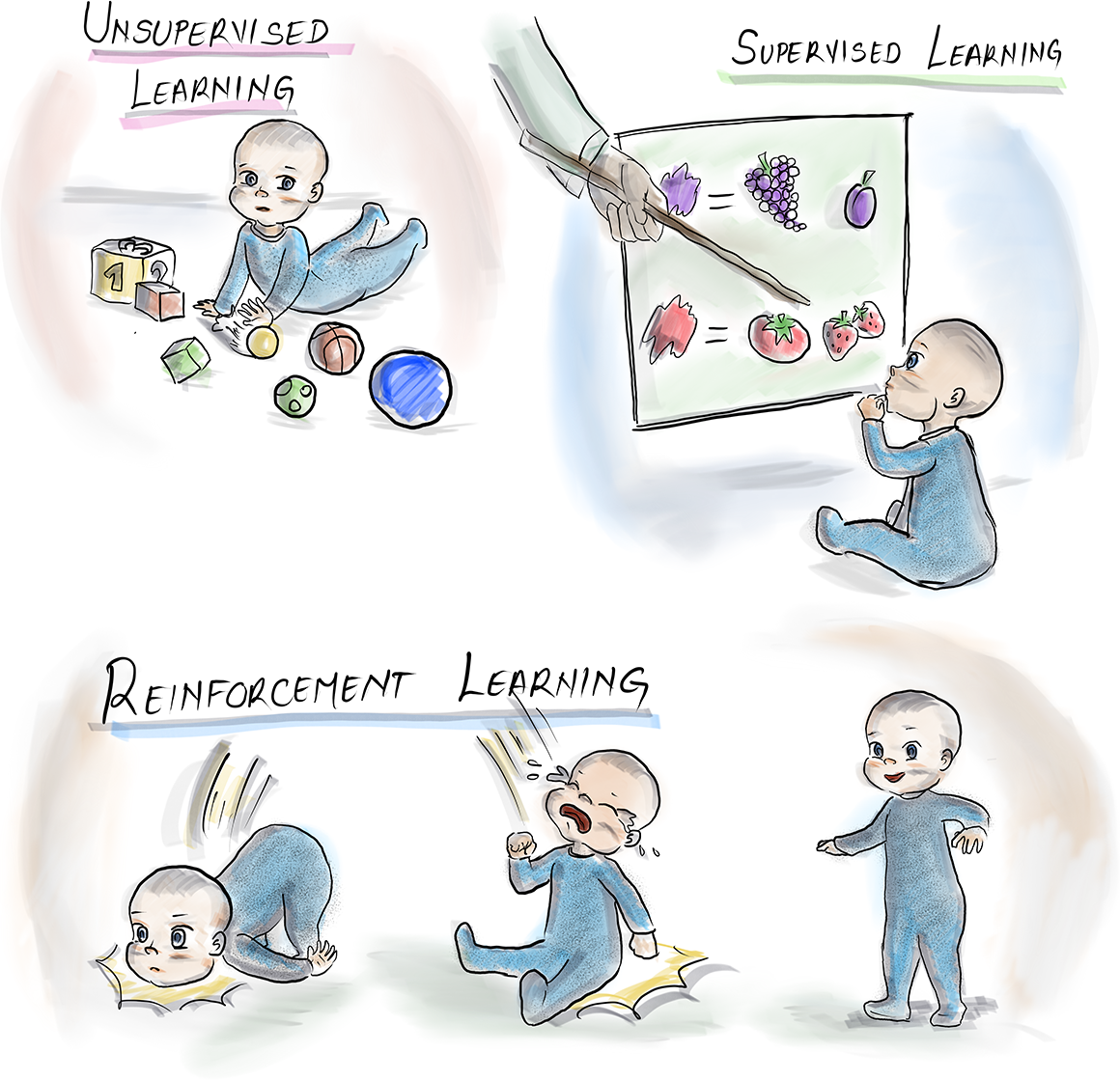
Compare supervised learning with unsupervised and reinforcement learning in one visual overview. section 1.5


















