Machine learning uses patterns in data to help identify and anticipate cybersecurity threats. Models trained on historical and real-time data can flag anomalies or correlate events that analysts might otherwise miss. The goal is earlier, more actionable detection—not replacing security judgment. section 1.6 section 10.0
Match the approach to the security question:
- Use models such as random forests, support vector machines, or neural networks to find threat patterns in network traffic or user behavior. section 10.3.4
- Use clustering to investigate anomalous behavior, or predictive analytics to estimate future risk from historical data, threat intelligence, and current vulnerabilities. section 12.0 section 10.1
- Check data quality and validate results: biased or incomplete data can produce false positives, missed threats, and misleading insights. section 1.6
Turn detection into a business decision
A financial institution adds machine-learning anomaly detection and predictive threat intelligence after struggling to identify advanced persistent threats. Compare detection and response metrics before and after deployment, then use the changes to prioritize further improvements. In a healthcare investment scenario, an executive presentation pairs a $500,000 detection-system cost with reported response-time improvement from 24 to 4 hours and clearly labeled estimated breach-prevention savings. section 10.3.4 section 4.3.4
Figure 10.2 The left side shows the advanced threat detection metric dashboard for SecureShield before implementing improvements. On the right is the metrics after implementing dynamic risk scoring with anomaly detection and real-time threat intelligence feeds.
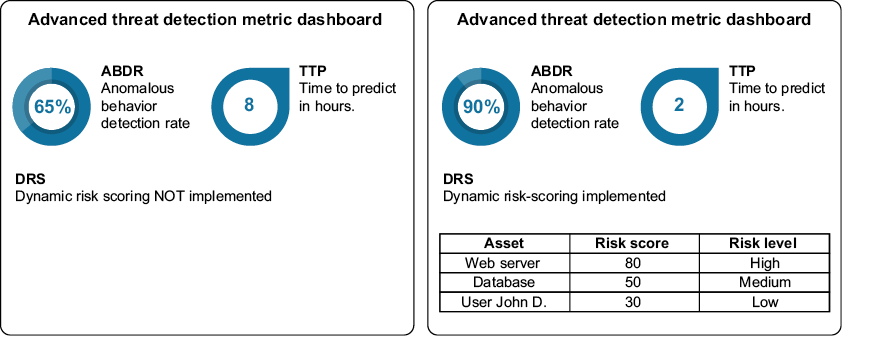
Compare the before-and-after threat-detection dashboard to see how anomaly detection and real-time threat intelligence are presented as operational improvements. section 10.3.4









































