Artificial intelligence (AI) is the effort to automate intellectual tasks normally performed by humans. It is broader than machine learning: a system can count as AI without learning from data. section 1.2
A chess program built from rules
An early chess program could follow rules written by programmers. It attempted an intellectual task, so it was AI; because it did not learn its rules from data, it was not machine learning. section 1.2
The main approaches fit inside one another:
- AI includes attempts to automate human cognitive processes, including approaches that do not learn. section 20.1.1
- Machine learning develops models through exposure to training data rather than relying only on hand-coded rules. section 20.1.1
- Deep learning is a branch of machine learning whose models use layers with weights learned during training. section 20.1.1
- Generative AI is a subset of deep learning that can generate text, images, video, or sound. section 20.1.1
Figure 1.1 Artificial intelligence, machine learning, and deep learning
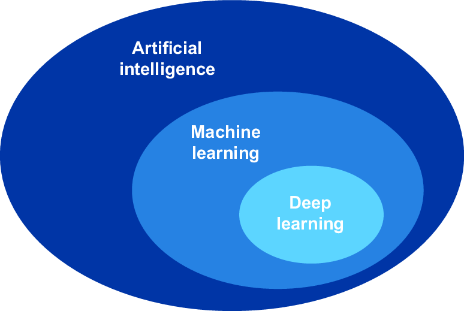
Use the figure to locate AI, machine learning, and deep learning within the same hierarchy; the terms are related, not interchangeable. section 1.1
AI took shape as a research field at a 1956 workshop that asked whether machines could use language, form concepts, solve problems, and improve themselves. Later approaches included symbolic AI and expert systems. Their periods of optimism were followed by disappointment and reduced funding, often called AI winters. section 1.2 section 1.11
Present-day uses include chatbots for questions and homework assistance, autonomous driving in some cities, and protein-structure prediction. These deployments show practical progress, not that human-level artificial general intelligence has arrived. Short-term claims about jobs or productivity deserve separate scrutiny from AI’s potential long-term impact. section 1.12 section 1.10






















