Artificial intelligence (AI) creates computational systems that perform tasks typically requiring human intelligence. These systems act autonomously, adapt to changing environments, and use data as their fuel. section 1.1 section 1.2
AI is broader than chatbots or generative models. It includes systems that sense, reason, learn, search, solve problems, and make decisions without constant instruction. section 1.0 section 1.2
Typical AI tasks include:
- Playing and winning complex games. section 1.2
- Detecting cancer tumors in body-image scans. section 1.2
- Generating artwork from a natural-language prompt. section 1.2
- Driving cars autonomously and supporting language-based chatbots. section 1.2
A practical way to recognize AI
Consider an autonomous car: it receives data from its surroundings, processes that information, and acts without continuous human instruction. Its intelligence comes from combining perception, adaptation, and decision-making to handle a changing environment. section 1.1 section 1.2
Understanding AI means looking inside the black box: tracing how explicit search and evolutionary algorithms lead toward statistical machine learning, deep learning, and generative AI. Older fundamentals remain useful in modern implementations. section 1.0 section 1.6
Figure 1.6 Levels of AI
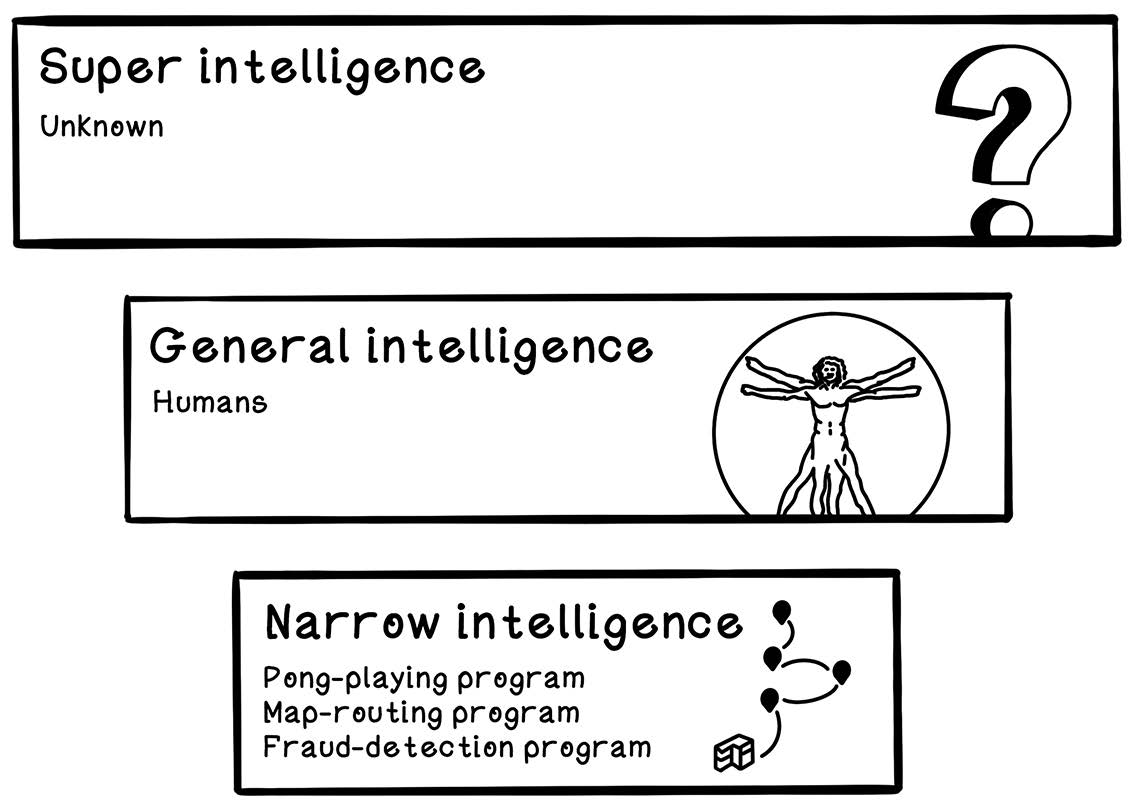
Use the levels-of-AI diagram to distinguish related AI terms and locate systems across the field. section 1.14
Figure 1.5 The evolution of AI
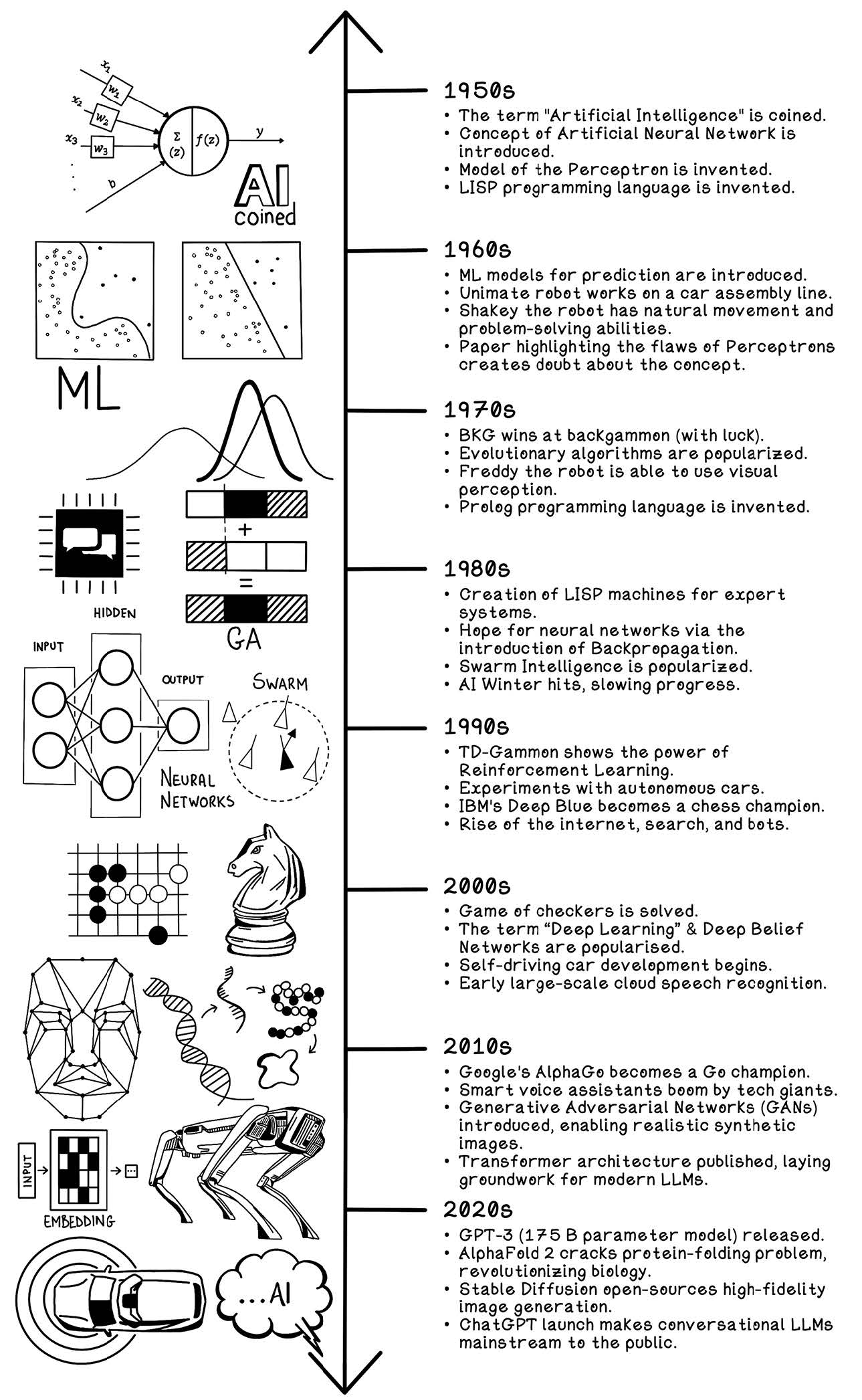
Use the evolution diagram to connect historical milestones with the foundational and modern approaches used today. section 1.6






















