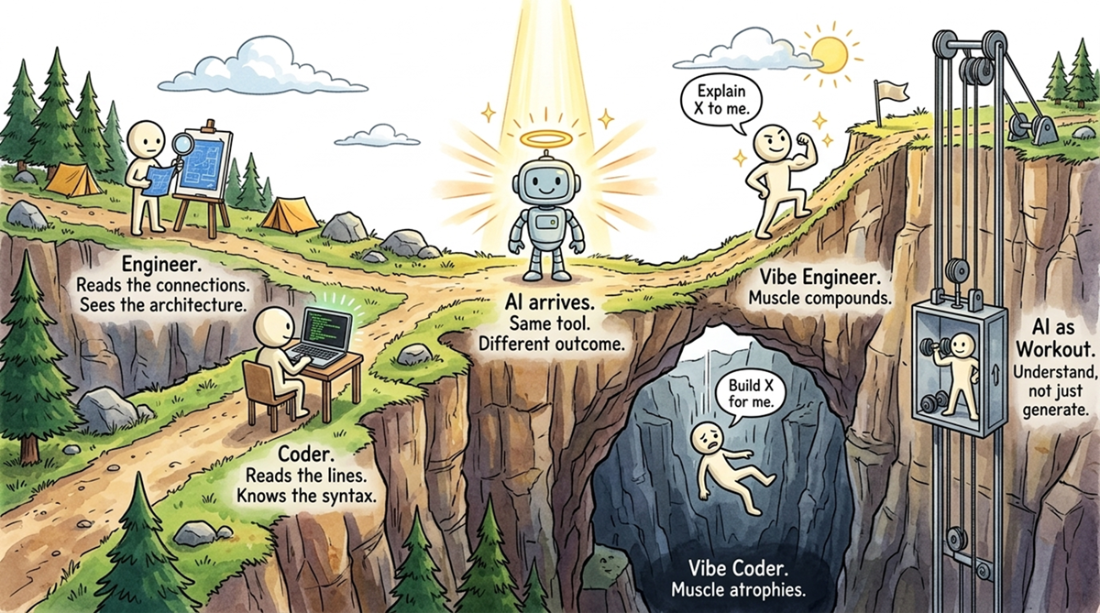
Artificial intelligence multiplies the architectural skill brought to it: it can accelerate output, but it cannot replace understanding. Asking it to build a feature may produce working code and comprehension debt; asking it to explain the system first builds a mental model for safer change. section 1.3 section 1.3.2
Use AI as an engineering partner by following this loop:
- Ask for explanations, system boundaries, dependencies, and concrete artifacts before requesting implementation. section 1.3.2
- Treat every confident answer as a claim: check names, files, behavior, and assumptions against the actual code. section 1.4
- Use source code to reconstruct product intent, including its solved pain, positioning, shipped surprises, and deliberate absences. section 5.0
Figure 1.4 A developer stands at a fork. One path descends to "coder mode," where they say, "build X for me," outsource understanding, and find the ground crumbling. The other path climbs to "engineer mode," where they say, "explain X to me," and build a mental model with each step. The same person, using the same AI, gets two different outcomes depending on which mode they choose.
Choose engineer mode: replace “build X for me” with “explain X to me,” then use the resulting model to guide implementation. section 1.3.2