liveBook · Manning

Human-AI collaboration

As explained in Introduction to Generative AI, Second Edition

Human–AI collaboration is a pattern in which people and artificial-intelligence systems combine their complementary abilities to produce an outcome.

Human–AI collaboration combines human imagination, judgment, and oversight with artificial intelligence’s ability to synthesize inputs and generate outputs rapidly. It treats AI as a creative and productivity tool rather than an automatic replacement for people. section 6.5 section 6.12

The pattern appears in creative work, coding, administration, and education. It can accelerate production and generate many alternatives, but people must check outputs because large language models can make mathematical errors, invent facts, or produce misleadingly human-like responses. section 6.12 section 6.5

A creative team combines human direction with AI generation

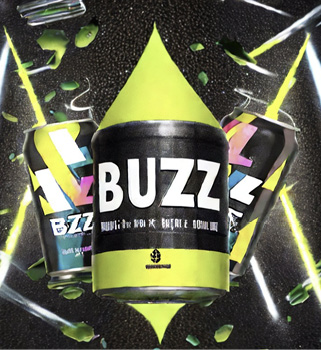
In an advertising competition, one team used AI to generate assets and then assembled the final poster themselves. Their human–AI collaboration scored higher for emotional response than entries made solely by humans or AI. section 6.5

Figure 6.3 An AI-generated advertisement, created with the prompt “poster for a new energy drink called Buzz” by the open source image generation model Stable Diffusion
A green and black can with white text

AI-generated content may be incorrect.

View an AI-generated advertisement created from a simple product prompt, illustrating rapid machine-generated creative assets. section 6.5


How Introduction to Generative AI, Second Edition covers it

How deep it goes
Explains complementary strengths and limitations through examples, but stops short of implementation details or operational procedures.
Examples
Uses advertising concepts, AI-generated posters, coding assistance, administrative tasks, and educational work as examples.
What you can do after
Apply human–AI collaboration by combining rapid machine generation with human direction, evaluation, and revision.
How it connects
Connects human–AI collaboration with generative AI, large language models, coding assistants, creativity, education, and AI agents.

Also explained in

Compare how 2 books explain human-AI collaboration →

Related concepts

This explainer was generated by Manning's knowledge graph from the text of Introduction to Generative AI, Second Edition. The section links point to the parts of the book it draws on.