hx-swap tells HTMX how returned HTML changes a target element. Used with hx-target, it turns a server response into a focused page update instead of reloading the whole page. section 12.2 section 12.7
Replacing a random song
A link can request another song and replace the contents of the element selected by hx-target: <a hx-get="/random-song" hx-target="#song" hx-swap="innerHTML">Another song</a>. The view returns an HTML partial, and HTMX inserts it inside #song. section 12.2
Read the two attributes as a small division of labor:
- hx-target identifies which tag receives the update, using a CSS selector. section 12.7
- hx-swap identifies which part of that tag changes; innerHTML replaces the contents inside it. section 12.2
- The server response is typically a partial rather than a complete page, while Django continues using ordinary view mechanisms. section 12.2 section 12.7
Figure 12.1 Using HTMX attributes to change a link into an action that replaces a portion of the page
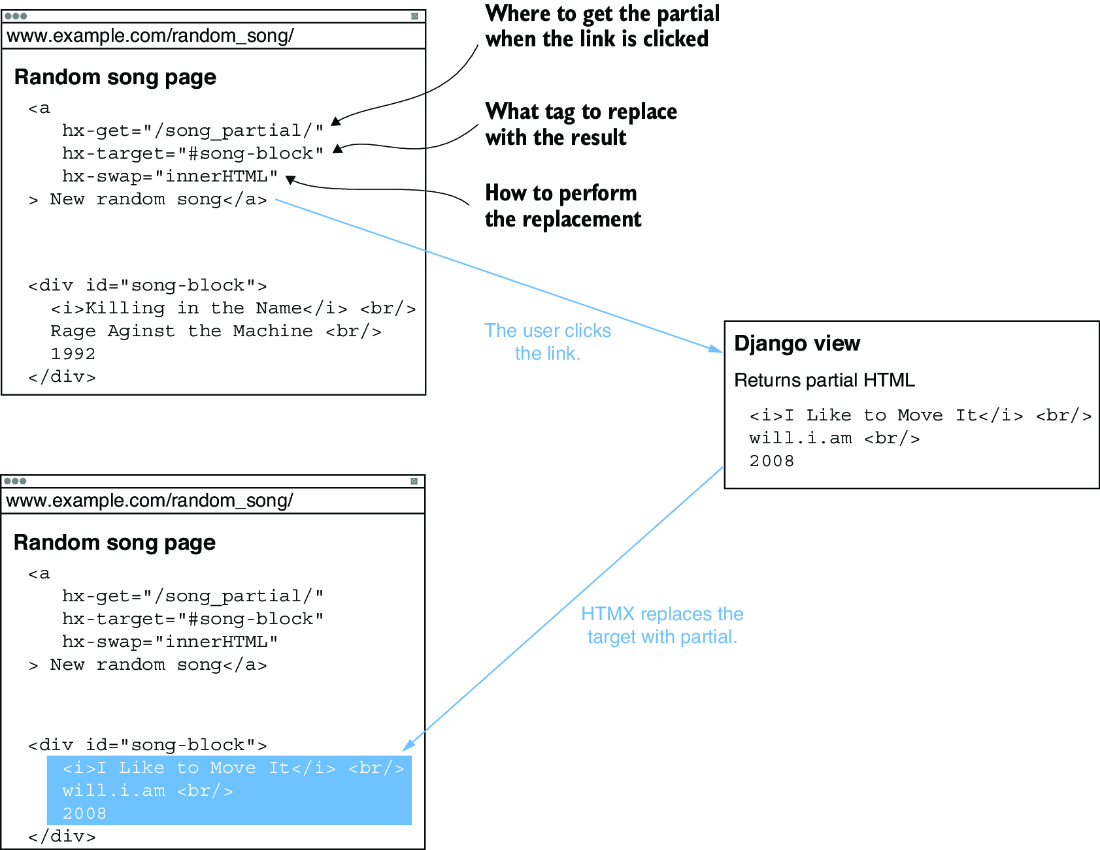
Trace the request, partial response, target selection, and replacement flow in the interaction diagram. section 12.2
