A hypothetical condition is an alternative value or circumstance imposed or considered in a counterfactual analysis. In causal reasoning, it answers a “what if” question by specifying what would happen if a variable took a chosen value, rather than merely describing an observed association. section 8.2.3
The condition is represented as an intervention. For example, “if side-quest engagement was high” becomes an intervention setting engagement to high; the resulting hypothetical outcome concerns in-game purchases under that intervention. Ideal intervention removes the target variable’s causal influence from its parents, represented with do-notation, counterfactual subscripts, graph surgery, or a structural causal model. section 8.2.3
Distinguish the hypothetical condition from nearby parts of a causal query:
- A factual condition records observed facts that define the target population, such as low engagement or purchases below $50. section 8.2.4
- A hypothetical outcome states what would occur under the imposed condition, such as purchases exceeding $50. section 8.2.3
- A counterfactual arises when the hypothetical condition or outcome conflicts with the factual conditions, such as asking about high engagement for a player observed with low engagement. section 8.2.4
In-game purchase intervention
Ask: “What would a player’s in-game purchases be if side-quest engagement were high?” The hypothetical condition is high engagement, written as an intervention on engagement; the answer describes the resulting purchase distribution. If the observed engagement is already low, the query is counterfactual because the factual and hypothetical conditions conflict. section 8.2.3 section 8.2.4
Figure 8.4 Elements of a conditional counterfactual hypothetical formalized in counterfactual notation
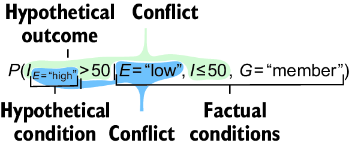
Use the figure to inspect how factual conditions, hypothetical conditions, and hypothetical outcomes map onto counterfactual notation. section 8.2.4
