Image generation computationally produces or modifies visual content from prompts, learned patterns, or existing images. Enterprise uses include architecture, fashion, avatars, virtual try-on, medical training, creative content, synthetic data, and generative design. section 4.0 section 4.5
Common architectures include variational autoencoders, generative adversarial networks, vision transformers, and diffusion models. Diffusion models support varied outputs and are described as more robust against mode collapse. section 4.1.1 section 4.5
Improve generation quality and plan editing explicitly:
- Describe the subject, background, style, mood, structure, size, lighting, and viewing perspective in the prompt. section 4.4.4
- Treat hands, faces, words, logos, and multiple characters as risk areas requiring review or manual editing. section 4.4.4
- Use inpainting to modify selected regions, outpainting to extend boundaries, and variations to explore alternatives. section 4.5
Enterprise product concept
Generate a fashion concept for virtual clothes try-on by specifying the garment, model, background, style, lighting, and camera perspective. Add brand words or logos manually, then use inpainting for localized corrections. section 4.0 section 4.4.4
Figure 4.4 Variational autoencoder architecture
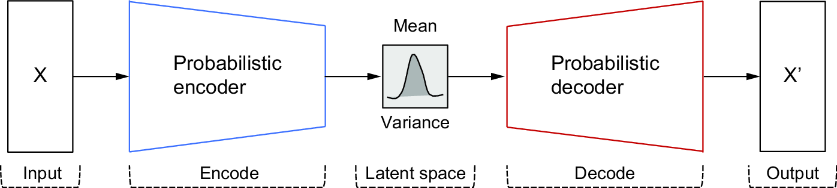
Use the architecture diagram to relate image encoding, latent representation, sampling, and decoding in a variational autoencoder. section 4.1.1





