A watermark can signal where an image came from, but its appearance is not proof of origin. Getty Images alleged that some AI-generated images reproduced altered versions of its watermark, potentially creating a false impression of association. The example shows both why origin matters and why a mark must be interpreted carefully. section 4.11
Digital watermarking places a visible mark or a hidden, detectable signal in media. For AI-generated content, the aim is to make its origin checkable rather than ask viewers or detection software to judge whether it merely looks synthetic. Watermarks can be applied to images, audio, video, and text. section 4.4 section 10.23
The signal takes different forms depending on the medium:
- An image may carry a visible mark or an imperceptible signal embedded in its pixels. Google’s SynthID is designed to remain detectable after common changes such as cropping or compression, though such changes can still threaten invisible watermarks. section 4.4 section 10.23
- AI-generated text can carry a statistical pattern created while words are chosen. A model might favor one designated group of words slightly more often, leaving a pattern that a checker can seek without making the message visibly marked. section 6.9
Figure 6.9 How a language model uses highlighted word biasing to embed watermarks in the generated text
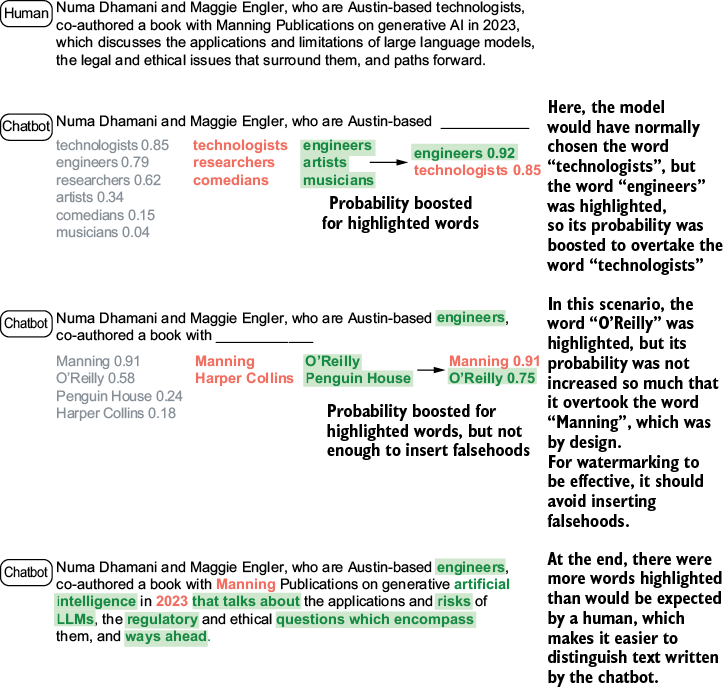
The figure illustrates how favoring a designated group of words during generation can leave a detectable pattern in text. section 6.9
A watermark is not the same as a complete record of a file’s history. Provenance systems such as the Coalition for Content Provenance and Authenticity (C2PA) use cryptographic signatures to document creation, editing, and distribution. Both approaches seek evidence of origin, but neither makes every piece of synthetic media identifiable. section 4.4
Watermarking works only when content is marked and the signal survives. Cropping, resizing, or compression may weaken an invisible media watermark; edits or paraphrasing can remove a text pattern. A publicly available checker could also help someone repeatedly revise text until it passes a test. Broad adoption and public access to verification tools matter, while constraints on word choice may affect output quality. Watermarking is therefore one aid to verification, not a reliable test for every unmarked or altered item. section 4.4 section 10.23

