liveBook · Manning

Implicit trust

As explained in Grokking Software Architecture

Implicit trust is an access assumption that treats a request as trustworthy based on its location or origin without independently verifying it.

Implicit trust treats a request as safe because it has crossed the perimeter and is moving inside the network. That shortcut can let an attacker who breaches an analytics dashboard pivot into a payment database. section 11.3.3

Zero Trust replaces that assumption with a stricter rule:

  • Verify every request, whether it comes from the internet or an internal service, by authenticating and authorizing it and validating it cryptographically. section 11.3.3
  • For service-to-service communication, use mutual TLS so both client and server verify each other’s identities. section 11.3.3
Figure 11.5 In a Zero Trust world, you don't take anyone's word for it. mTLS is the "blind date" of architecture: neither party moves forward until both have verified each other's identity.
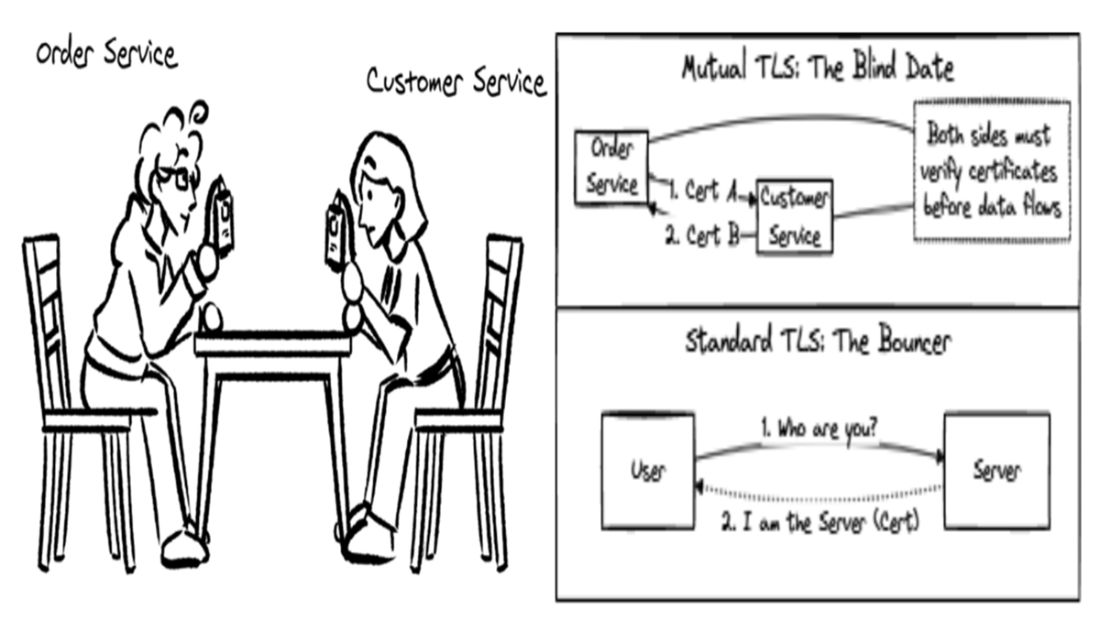
The blind-date analogy illustrates why neither service should proceed without verifying the other. section 11.3.3

How Grokking Software Architecture covers it

How deep it goes
Defines the assumption, illustrates its consequences with an attack scenario, and contrasts it with verification through mTLS.
Examples
Uses an attacker’s pivot from an analytics dashboard to a payment database and an ID-check analogy for mTLS.
What you can do after
Evaluate whether internal requests are being trusted by location rather than explicitly verified.
How it connects
Connects implicit trust to Zero Trust Architecture, API gateways, perimeter firewalls, virtual private clouds, and mutual TLS.

Related concepts

This explainer was generated by Manning's knowledge graph from the text of Grokking Software Architecture. The section links point to the parts of the book it draws on.