Trust
Trust is confidence that an entity or source is reliable and appropriate to rely on in a given context.

Lead Developer Career Guide
Confidence that another person or group is reliable, supportive, and likely to act honestly and in good faith.
- How it is used
- Supports open communication and collaboration in lead developers’ relationships with teams, clients, and mentees.
- How deep it goes
- Develops practical trust-building behaviors and consequences of mistrust, without presenting a formal model or measurement method.
- Examples
- Uses a mentor’s misleading code approval, client consultations, and candid conversations about work pressures to make trust concrete.
- What you can do after
- Practice/perform trust-building through listening, honest feedback, clear expectations, confidentiality, and reliable delivery.

Data for All
Trust is confidence that a person, institution, service, or system will act reliably and appropriately.
- How it is used
- Frames trust as a foundation for engaging with and managing personal data proactively.
- How deep it goes
- Defines trust and surveys institutional trends and incentives, while only skimming legislative and regulatory efforts.
- Examples
- Uses a connected household’s privacy concerns and historical US government trust surveys to illustrate reliance and declining confidence.
- What you can do after
- Evaluate trust in data-handling institutions by considering their practices, incentives, and the laws shaping personal data control.

The Art of Unit Testing 3e
Confidence that tests reliably reveal whether the covered functionality is working correctly.
- How it is used
- Uses trust to judge whether passing and failing test results deserve action rather than dismissal or repeated manual checking.
- How deep it goes
- Defines trust through pass/fail reactions and examines false failures, suspect passes, flakiness, and practical remedies.
- Examples
- Uses a deliberately broken JavaScript password validator and an early failed mock verification to expose different limits on test results.
- What you can do after
- Diagnose/debug with it by questioning false failures, suspect passes, and flakiness, then checking whether a deliberate bug makes a test fail.

Think Like a Software Engineering Manager
Trust is confidence in another person’s reliability, intentions, competence, or support.
- How it is used
- Supports team cohesion and cross-functional collaboration when managers set expectations, make decisions, and address concerns.
- How deep it goes
- Provides practical behaviors, warning signs, and ways to assess trust rather than a formal measurement method.
- Examples
- Uses a design disagreement resolved through facilitated discussion and a working-hours decision challenged through one-on-one feedback.
- What you can do after
- Practice/perform trust-building through candid conversations, clear expectations, consistent behavior, and timely responses to concerns.
Read how Think Like a Software Engineering Manager explains trust →

Authorization in Action
Trust is the willingness to rely on another person or entity despite vulnerability to that party's actions and possible failure.
- How it is used
- Frames reliance and vulnerability in digital identity, credential verification, and authorization decisions.
- How deep it goes
- Defines trust against confidence, illustrates their tradeoff, and examines technical controls and governance without offering a complete assessment procedure.
- Examples
- Uses air travel, phishing, credential issuers, and corporate network perimeters to illustrate reliance and vulnerability.
- What you can do after
- Evaluate and understand where evidence reduces reliance and where governance or human judgment remains necessary.
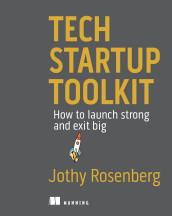
Tech Startup Toolkit
Organizational trust is confidence that colleagues and leaders will act reliably, respectfully, and in good faith within a workplace.
- How it is used
- Frames trust as a culture practice that enables autonomy, collaboration, and alignment during change.
- How deep it goes
- Explains trust through management behaviors, communication habits, and team-building actions rather than formal organizational theory.
- Examples
- Uses angry email, social team activities, shared wins, and remote Google Meet and Slack drop-ins as concrete situations.
- What you can do after
- Apply it by treating colleagues as adults, communicating candidly, supporting cross-team relationships, and verifying without reflexive suspicion.
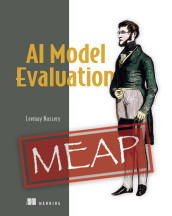
AI Model Evaluation
The degree to which a model or system merits confidence because its behavior is reliable, responsible, and interpretable.
- How it is used
- Uses trust to assess confidence in product behavior and the evaluations that inform launch and model decisions.
- How deep it goes
- Develops practical monitoring, validation, documentation, and recovery steps rather than treating trust as a single metric.
- Examples
- Uses a movie recommender with misleadingly healthy engagement and an agent whose offline task scores miss live workflow failures.
- What you can do after
- Diagnose gaps in evaluation trust by comparing offline and online outcomes and revalidating against a gold-standard dataset after failures.

The Art of AI Product Development
User trust is a user's willingness to rely on a product or system based on perceived reliability, integrity, competence, transparency, and responsible behavior.
- How it is used
- Guides AI product design, governance, and communication toward informed reliance and adoption.
- How deep it goes
- Explains practical trust-building choices across transparency, human control, feedback, and governance, without specifying a trust measurement method.
- Examples
- Uses adjustable supply-chain forecasts and sustainability reporting tasks to illustrate confidence, control, and automation preferences.
- What you can do after
- Apply trust-building practices when selecting automation opportunities, communicating limitations, and planning governance.

Architecture Modernization: Socio-technical alignment of software, strategy, and structure
Trust is confidence that another person, organization, or data source is reliable and should be given appropriate weight in a decision.
- How it is used
- Guides domain modeling, relationship building, listening sessions, and enabling-team collaboration during modernization.
- How deep it goes
- Develops trust from reliability language into a coded scale and practical behaviors for patient, safe, collaborative work.
- Examples
- Uses royalties data matching, a –5-to-5 trust object, a tech-lead relationship, safe listening sessions, and AMET collaboration.
- What you can do after
- Apply it via domain modeling, patient relationship-building, and safe listening to improve collaboration and weight data reliability.
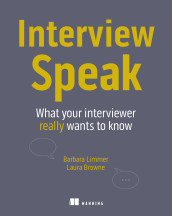
Interview Speak
Confidence in another person’s reliability, integrity, or ability to act dependably.
- How it is used
- Frames interview answers that demonstrate credibility, approachability, and the ability to gain support across an organization.
- How deep it goes
- Provides a practical answer structure and detailed managerial examples, emphasizing actions, interactions, hesitation, and outcomes.
- Examples
- Uses managers who clarify priorities, coordinate departments, advocate for flexibility, and sustain contact with teams.
- What you can do after
- Practice/perform it by giving specific interview stories that show how relationships produced credible, positive results.
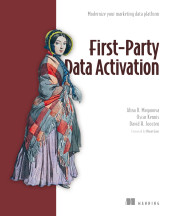
First-Party Data Activation
A customer's confidence that a brand will act reliably, honestly, and responsibly with respect to the customer relationship and data.
- How it is used
- Frames trust as the foundation for privacy-centric customer relationships and responsible first-party data collection at scale.
- How deep it goes
- Explains practical principles for transparency, choice, and security, while emphasizing strategy over a regulation-by-regulation breakdown.
- Examples
- Illustrates trust through purchase-history recommendations, loyalty rewards for shared preferences, and the reputational damage of the Equifax breach.
- What you can do after
- Apply trust-building principles to explain data use, offer meaningful choices, and protect customer information.
Healthcare IT
Health data trust is justified confidence that health information is accurate, reliable, appropriately handled, and safe to use.
- How it is used
- Frames safe healthcare software as a balance between technically precise data and trustworthy privacy, security, provenance, and regulatory safeguards.
- How deep it goes
- Defines trust through safeguards and implementation questions, then connects it to interoperability and patient-safety consequences.
- Examples
- Uses identity resolution, conflicting timestamps, provenance questions, fragmented records, APIs, and network-to-network exchange as concrete tests.
- What you can do after
- Evaluate health data systems by checking technical precision, provenance, privacy, security, interoperability, and regulatory alignment.
Data-Driven Cybersecurity
A customer's confidence that an organization will act reliably, securely, and in the customer's interests.
- How it is used
- Frames patient trust as a business objective that guides security metric selection and executive reporting.
- How deep it goes
- Uses a survey result and security indicators to discuss trust, but does not specify survey methodology or establish causation.
- Examples
- Illustrates trust with a 70% patient trust survey result reported alongside encryption compliance and breach-detection time.
- What you can do after
- Evaluate/understand patient trust as a business signal when interpreting security metrics and recommending priorities to leadership.
Fast by Default
Trust is a user's or customer's confidence that a product or service is reliable and worthy of continued use.
- How it is used
- Frames performance as a business and product concern because speed influences customer satisfaction, retention, conversion, and continued use.
- How deep it goes
- Explains trust erosion through observable performance patterns and outcomes, but stops short of defining a formal trust model or measurement method.
- Examples
- Uses slow interactions, failed large data tables, measurable conversion changes, and competing API response times as concrete trust signals.
- What you can do after
- Evaluate performance risk by linking measurements and regressions to user value, revenue, retention, adoption, and stakeholder priorities.

Inside AI
Trustworthiness is the degree to which a system can be relied upon to behave safely, reliably, transparently, and appropriately.
- How it is used
- Frames trustworthiness as a deployment requirement for AI affecting safety, rights, livelihoods, and critical services.
- How deep it goes
- Explains adversarial vulnerability, black-box reasoning, and risk-based restrictions, but does not detail implementation requirements.
- Examples
- Uses altered surveillance images and an unexplained military life-and-death decision as concrete trustworthiness problems.
- What you can do after
- Evaluate whether an AI system is appropriate for high-stakes use by examining vulnerabilities, explanations, and societal risks.

How Large Language Models Work
Confidence that a system or party is reliable, competent, honest, and aligned with expected interests.
- How it is used
- Guides the design and evaluation of LLM applications that must earn appropriate user confidence.
- How deep it goes
- Distinguishes explainability from trustworthy design and identifies overtrust, automation bias, transparency, incentives, and feedback.
- Examples
- Uses an LLM-based tech support system and user reactions to apparently explanatory outputs.
- What you can do after
- Evaluate whether explanations, human checks, transparency, incentives, and feedback genuinely support reliable LLM use.
Designing AI Agents
The confidence an organization grants an agent to act within defined limits, informed by its observed outcomes.
- How it is used
- Controls an agent’s working room within hard limits according to observed outcomes and task risk.
- How deep it goes
- Explains scoped approval routing, evidence retention, outcome recording, and the limits of a partially applied governance boundary.
- Examples
- Uses a code-review agent’s supervised tool calls and a compensation approval packet with current and proposed amounts.
- What you can do after
- Evaluate how task risk, hard ceilings, and governance coverage affect an agent’s permitted autonomy.

Introduction to Generative AI, Second Edition
Trust is confidence that information, systems, or content are reliable, authentic, and safe to rely on.
- How it is used
- Frames trust as a public-interest concern when synthetic media changes how people judge evidence and authenticity.
- How deep it goes
- Explains trust through deception, the liar’s dividend, and coordinated safeguards, without descending into detection implementation.
- Examples
- Uses fabricated media, the liar’s dividend, and deepfake face anonymization in Welcome to Chechnya.
- What you can do after
- Evaluate how synthetic media can undermine or protect trust and identify layered responses for verifying what is real.
Read how Introduction to Generative AI, Second Edition explains trust →
Also covered in
- Bug BashIn early access (MEAP)
- AI GovernanceIn early access (MEAP)
- Real-World Cryptography
- Think Like a CTO
- Architecting for AutonomyIn early access (MEAP)
- Effective Platform Engineering
- The Well-Grounded Data Analyst
- Learn PowerShell Scripting in a Month of Lunches, Second Edition: Write and organize scripts and tools
- Digital Twins in Action
- Data Storytelling with Altair and AI
- "Looks Good to Me"
- The Art of Code
What to know first
- authorizationAuthorization is the determination of which actions or resources an identity or other entity is permitted to access under defined permissions or policies.
- language modelA language model is a computational model that represents patterns in linguistic sequences to assign probabilities, predict, generate, or evaluate language.
- stakeholderA stakeholder is a person, group, or organization with an interest in, influence over, or potential to be affected by a system, project, decision, or its outcomes.
- AI agentAn AI agent is a computational system that uses artificial intelligence to interpret information and select or perform actions toward goals while interacting with an environment.
Related concepts
- confidencecontrasts with · Confidence is a degree or quantified measure of certainty or assurance associated with a belief, judgment, estimate, prediction, or result.
- accountabilityproduced by · Accountability is the obligation to answer for decisions, actions, and outcomes, including explaining them and accepting responsibility for their consequences.
- bug bashproduced by · A bug bash is a time-boxed, collaborative software testing event in which participants from multiple roles explore a product to identify issues and improvement areas.
- common groundproduced by · Common ground is a shared basis of understanding, experience, interests, or objectives that supports agreement and collaboration.
- communicationproduces · Communication is the exchange of information, meaning, or signals between people, groups, agents, devices, or software components.
- empathyproduced by · Empathy is the capacity to understand or recognize another person’s feelings, perspective, experiences, or needs.
Questions about trust
What is trust?
Trust is confidence that an entity or source is reliable and appropriate to rely on in a given context.
Which Manning books explain trust?
Lead Developer Career Guide, Data for All, The Art of Unit Testing 3e, Think Like a Software Engineering Manager, Authorization in Action, Tech Startup Toolkit, AI Model Evaluation, The Art of AI Product Development and 10 more.
What should I know before learning trust?
Manning books that teach trust usually introduce authorization, language model, stakeholder and AI agent first.
What is the difference between trust and confidence?
Trust is confidence that an entity or source is reliable and appropriate to rely on in a given context. Confidence is a degree or quantified measure of certainty or assurance associated with a belief, judgment, estimate, prediction, or result.
These guides are generated from the text of Manning books by Manning's knowledge graph and link to the sections they draw on. The full books are available on liveBook and at manning.com.