Health data trustworthiness is justified confidence that information is accurate, reliable, appropriately handled, and safe to use. Because health data retells a person’s clinical story across time and formats, failures can become immediate patient-safety risks. section 1.0 section 1.5
Trust is one of two pillars supporting safe, effective care. Precision makes data technically correct and timely; trust supplies regulatory and operational safeguards such as provenance, privacy, security, and compliance. Precise data without trustworthy handling can still fail the patient. section 1.2
Trustworthiness becomes an implementation responsibility through:
- Preserving provenance: identify who recorded information and how it was produced. section 1.2
- Protecting privacy and security while applying relevant regulatory safeguards. section 1.2 section 1.5
- Supporting interoperability across fragmented laboratories, clinics, hospitals, pharmacies, payers, and other systems. section 1.0 section 1.5
- Making identity, timestamps, terminology, governance, and data exchange precise enough for coordination and point-of-care decisions. section 1.2 section 1.5
Figure 1.2 “Precision“(technical correctness) and “trust“ (regulatory/operational safeguards) are the pillars of safe, effective care.
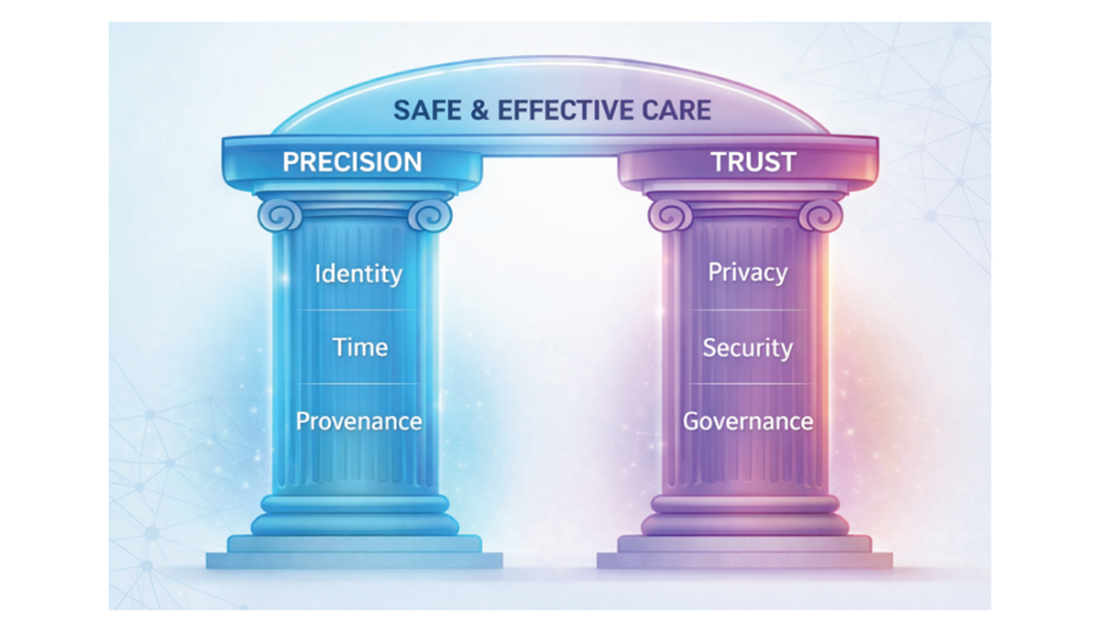
The precision-and-trust architecture shows why technical correctness and regulatory or operational safeguards must work together. section 1.2
Trustworthiness is tested as healthcare moves from files, faxes, and siloed applications toward standardized, real-time data exchange. Developer-ready APIs, patient-access requirements, and network standards expand access while making technical and regulatory judgment inseparable. section 1.3 section 1.5