A post from someone you follow is in-network content for you. So is content that person chooses to reshare, even if you do not follow its original creator. The distinction depends on your follow relationships, not on the post alone. section 1.2.2
In a network model, people decide what to reshare, while an algorithm ranks the available content. In an algorithmic model, the feed can also include out-of-network content: posts added because the system considers them interesting, even without a direct follow or reshare. The algorithm helps choose what enters the feed as well as how it is ranked. section 1.2.2
A post competing for attention
When someone publishes a post, it can enter the pool of candidates for their followers’ feeds. It might also be selected as out-of-network content for people who do not follow them. Neither group is guaranteed to see it: the post competes with other content for a place in the ranking. section 5.4
Figure 5.1 When a user U produces some content C, that content can be delivered to others in two different ways. First, it will be added to the pool of in-network content for users who follow U directly. At the same time, it might be algorithmically flagged as content with high relevance (or high probability of engagement) for users who don’t follow U directly. In that case, it will be inserted in the out-of-network bucket and be ranked accordingly. In neither case is there a guarantee that other users will see C, as it will compete for a spot with all the other content.
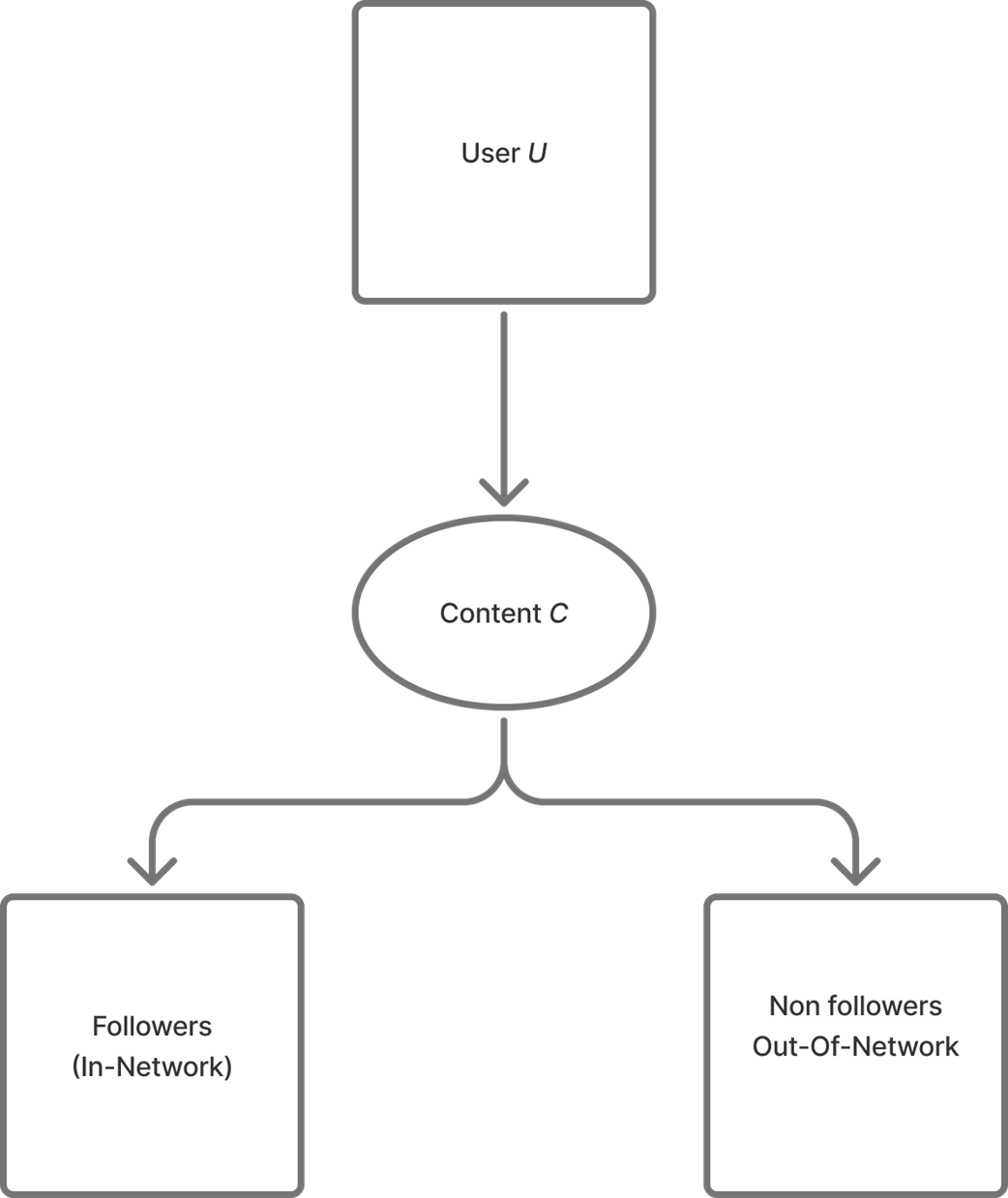
Follow how one post can enter in-network and out-of-network candidate pools without being guaranteed a place in either feed. section 5.4
A post intended for a familiar audience can also travel beyond it. Someone encountering it out of network may lack the background needed to understand its meaning or tone. This loss of context is called context collapse. section 8.2.2
