A feed can show you a post from someone you have never followed, perhaps because people in your circle liked it. This is out-of-network (OON) content: content produced by someone outside your direct follow network. In-network content comes from people you follow directly. section 2.2.1
A post can travel beyond its creator’s followers when a user reshares it. An algorithmic feed can also select content for people who do not follow the creator, without requiring a reshare. The algorithm uses signals about content and its author to curate candidates as well as rank them. section 1.2.2
A trending event
During an Olympics opening ceremony, someone who follows no sports accounts might still see related posts. Heavy interaction in a short period can make those posts candidates for a wider audience. Selection does not guarantee a view: candidates must still compete for a place in the ranked feed. section 2.2.1 section 5.4
Figure 5.1 When a user U produces some content C, that content can be delivered to others in two different ways. First, it will be added to the pool of in-network content for users who follow U directly. At the same time, it might be algorithmically flagged as content with high relevance (or high probability of engagement) for users who don’t follow U directly. In that case, it will be inserted in the out-of-network bucket and be ranked accordingly. In neither case is there a guarantee that other users will see C, as it will compete for a spot with all the other content.
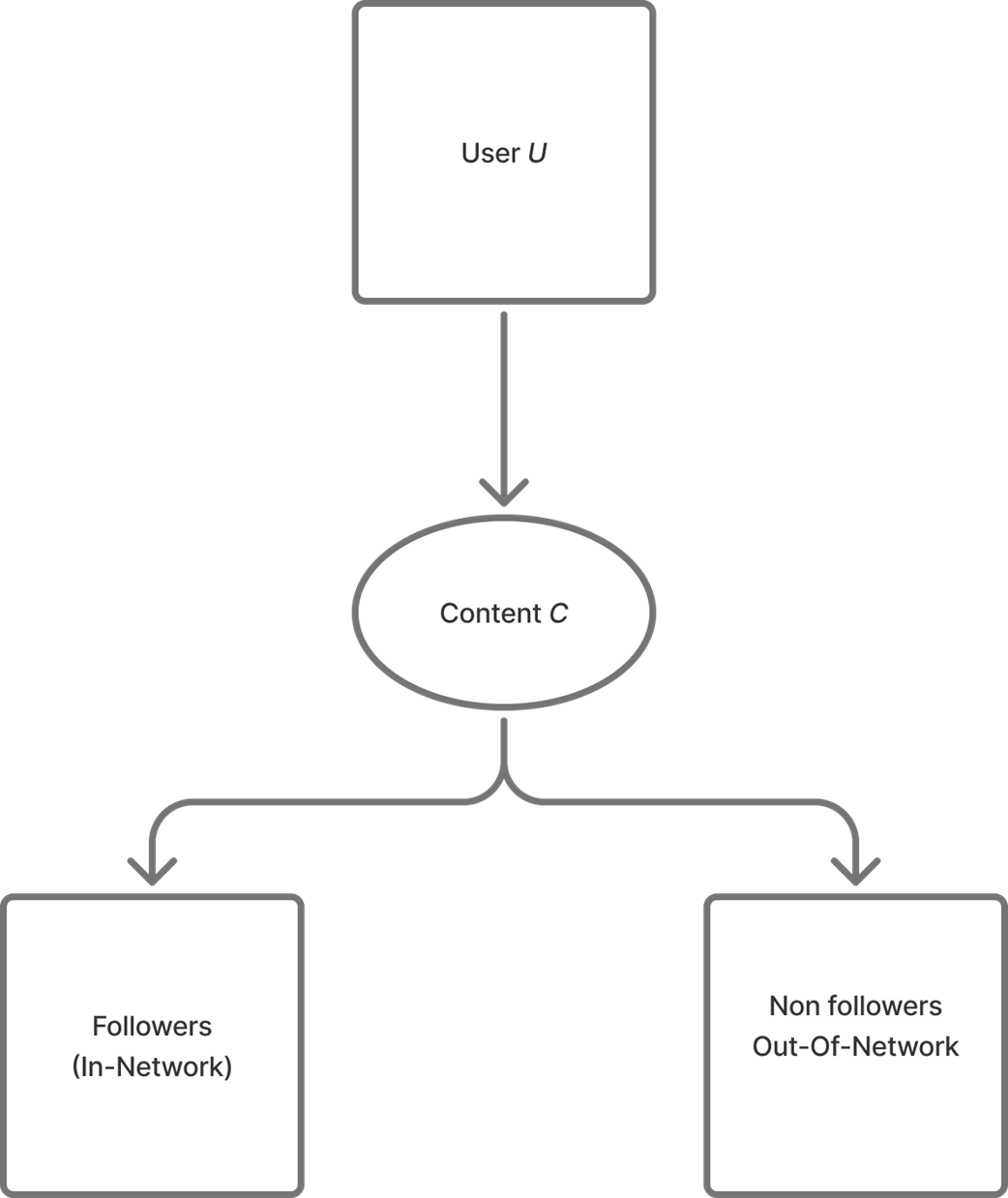
Follow one post as it becomes an in-network candidate for followers and a possible out-of-network candidate for others. section 5.4
Showing popular content more widely can create a feedback loop: more exposure can lead to more interactions, making the content appear popular enough to recommend again. People may interact out of curiosity, to follow a trend, or by mistake—not necessarily because they value the content. section 2.2.1
Reaching beyond an intended audience can also cause context collapse. A joke meant for a close group may land in a stranger’s feed without the background needed to understand its tone. Broader reach can help information spread, but it can also leave people feeling observed or judged by unintended audiences. section 8.2.2
