A ride-hailing platform entering a new city might offer drivers better payouts to attract them. Once enough drivers and riders join, it may reduce those payouts. The reward that helped build the marketplace can change as the platform’s needs change. section 6.3
An incentive is a reward, penalty, or expected benefit that influences a choice. An incentive structure is the arrangement of such pressures around participants. On platforms, it affects investors, companies, employees, creators, and users—not always in the same way. section 6.3 section 9.2 section 7.5.2
Investors taking high risks seek high rewards, putting pressure on companies to grow. Companies can pass that pressure to employees through measurable goals tied to bonuses and promotions. Rapid releases and easy-to-use products can support growth, but safety concerns may be postponed or ignored. section 9.0 section 9.2.4 section 9.4
Figure 9.2 How a centralized goal can be divided across various parts of the organization. In this case, the overall goal (North Star Goal) is to increase the active users by 1M. It has been estimated that the company needs to both increase new signups (the domain of the Growth Team) and make sure that fewer existing users drop out (under the purview of the Quality Team), to keep more users active. Members of each team are assigned projects that help with their respective goals. In that way, they have a clear and measurable way of managing their work, and they know they are contributing to achieving the North Star Goal.
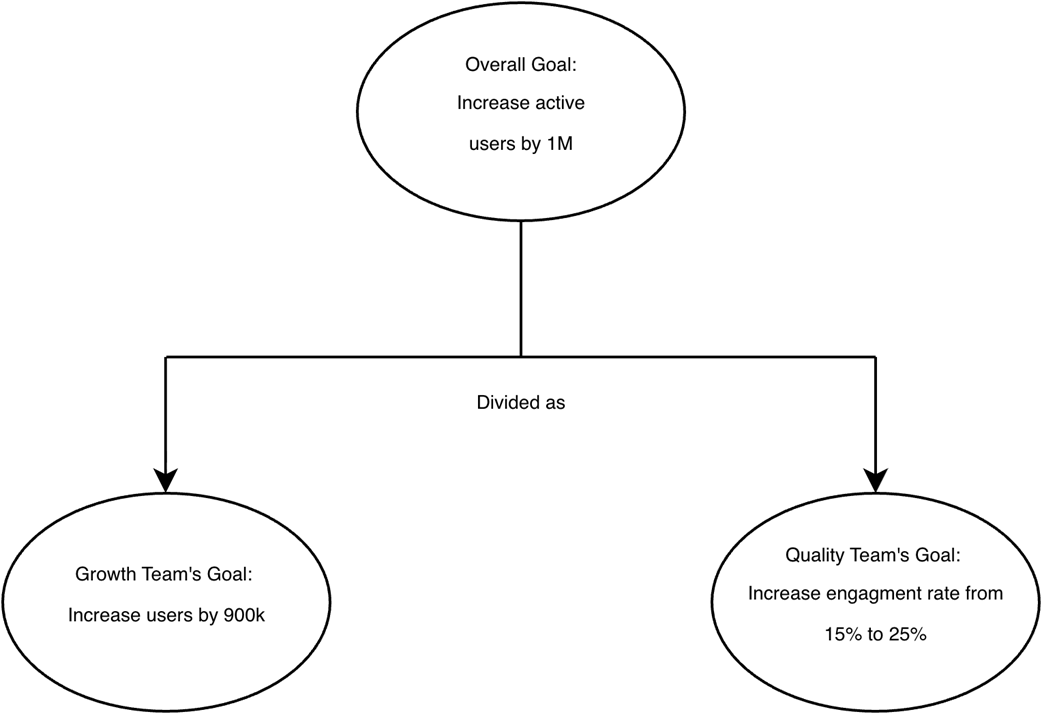
The diagram traces an active-user goal through team responsibilities to individual projects, showing how a company-wide target becomes part of employees’ work. section 9.2.4
Simple targets make work measurable, but they can miss what matters. User value is difficult to define, so a platform might use engagement as a proxy. Optimizing that proxy can reward clickbait rather than useful content. This illustrates Goodhart’s law: when a measure becomes a target, people may focus on moving the number instead of improving what it was meant to represent. section 9.2.4
Creators adapt to recommendations
When YouTube prioritized watch time over raw clicks in 2016, creators adapted their formats to remain visible, including using clickbait titles or finding niches with high-volume audiences. Recommendation choices can therefore shape what creators make, not just what audiences see. section 7.5.2
Incentives can coordinate growth and participation, but their effects depend on who sets them and what they reward. A metric or payout may serve a platform’s immediate goal while leaving worker experience, content quality, or safety less visible. section 6.3 section 9.2.4 section 9.4

