Infotainment combines information with entertainment, often presenting selected stories or opinions in ways designed to engage an audience rather than report developments objectively. Its central question is not simply whether content is called news, but whether editorial choices prioritize public information or influence, attention, and revenue. section 4.2.1
Commercial incentives can turn news operations into infotainment. Editors and owners may align stories with particular views, make them more interesting to increase viewership, and rely on advertising revenue. Since 2008, this movement away from objective reporting has intensified. section 4.2.1
Infotainment becomes easier to recognize when you look for these features:
- Continuous channels present opinion or selected perspectives while calling themselves news. section 4.2.1
- Platforms curate and order posts selectively to maximize revenue rather than provide a neutral window onto content. section 4.4.3
- When profit becomes the guiding principle, objective reporting can become opinion, facts can lose meaning, and trust can decline. section 4.4.3
A breakfast conversation
Someone spends the night watching several channels that run news continuously. Examining what they show reveals opinion-driven programming and infotainment: stories are selected and framed to interest a target audience, shape opinions, and support viewership and advertising. section 4.2.1
Figure 4.7 The majority of people do not believe the media is an honest or objective broker of information.22
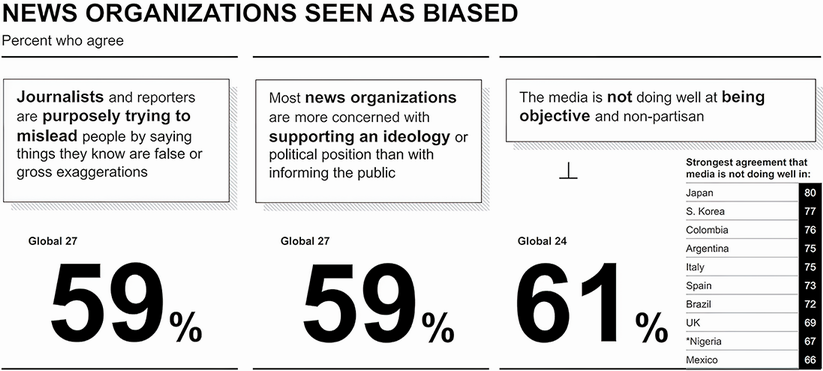
Use the figure to examine declining public confidence in media as an honest or objective broker of information. section 4.4.3
