Intentional bias is a systematic distortion in a forecast introduced deliberately or strategically when incentives are misaligned. A demand forecast should estimate unconstrained future demand—not become a financial budget, sales target, or supply plan. section 16.2
Figure 16.2 Sources of judgmental biases
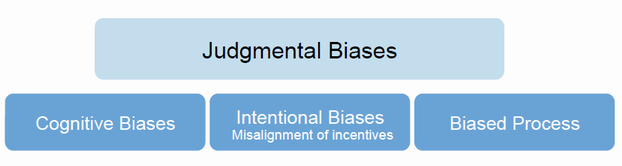
Use the bias map to distinguish intentional bias from cognitive bias and biased forecasting processes. section 16.2
Reduce intentional bias by improving the conditions around forecast judgment:
- Align forecasters’ and demand planners’ objectives so no participant benefits from pushing the forecast in a particular direction. section 16.4
- Review the baseline forecast with people who bring different mindsets, backgrounds, and information sources. section 16.4
- Let participants work independently before discussion to limit social pressure, conformity, and anchoring. section 16.4
- Discuss assumptions and resulting impacts rather than focusing only on the final numbers. section 17.0
When incentives distort a forecast
If a sales target or supply plan influences the demand estimate, the forecast can be deliberately pushed toward the organization’s preferred outcome. Keeping those objectives separate protects the estimate of unconstrained demand. section 16.2
