An interest payment is money a borrower pays a lender for using borrowed funds. In a bond, the issuer pays the bondholder periodically; this payment is commonly called a coupon payment. The issuer usually returns the original principal at maturity. section 1.2.2 section 5.2
Analyze an interest payment by checking the bond’s:
- Coupon rate, which may be fixed or floating and determines the annual payment while the bond is held. section 5.2
- Payment modality, including how often and when cash arrives; quarterly payments are common. section 5.2
- Credit risk and rating, because borrowers with greater default risk generally offer higher rates. section 1.2.2 section 5.2
- Maturity and market price, since selling before maturity can produce a gain or loss instead of simply receiving principal back. section 1.2.2
Plain vanilla bond
A basic bond lends money to a government, municipality, or company. The borrower makes coupon payments at fixed intervals, then repays the principal on a set maturity date. More complex bonds may repay principal in installments or use collateral. section 5.2
Figure 5.3 A plain vanilla bond
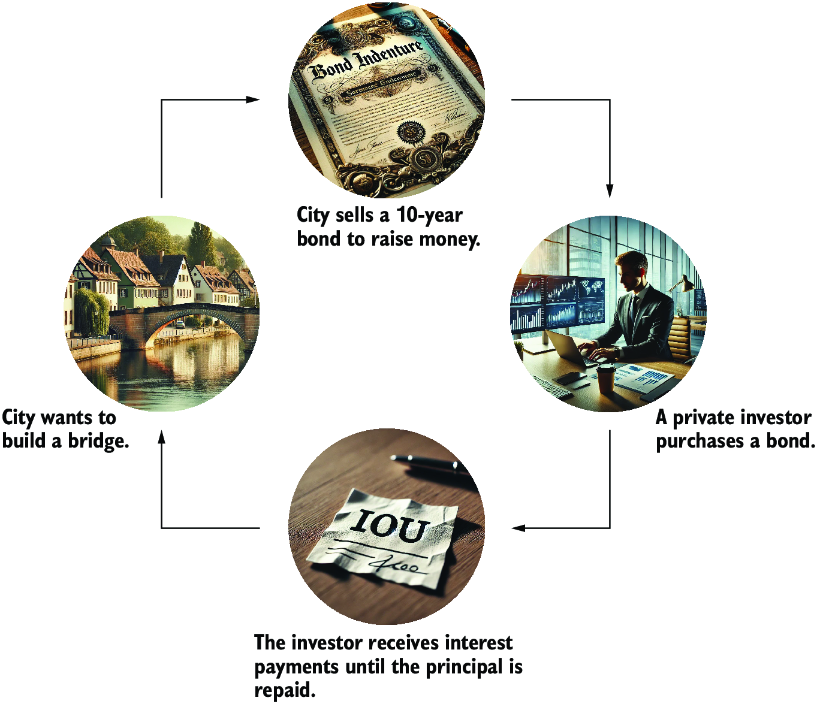
Use the plain-vanilla bond diagram to trace the flow from lending principal through periodic interest payments to final repayment. section 5.2

