An introduction earns the reader’s next few minutes by stating what they will get, why it matters, and what angle the article takes. Be upfront rather than trying to trick uninterested readers into continuing. section 5.4.2
Build an effective introduction with these checks:
- Start with backstory unless you have a genuinely strong hook, such as a startling fact, provocative statement, or anecdote. section 5.4.2
- Explain the article’s goal, distinctive angle, and value to the target reader. section 5.4.2 section 5.7
- Provide enough context to orient readers, then preview where the article goes and what they will experience. section 5.2.3
- Tighten every sentence for clarity and concision; read the introduction aloud before publishing. section 5.4.2 section 5.7
Orient readers before the technical detail
A weak introduction jumps directly into a database discussion, leaving readers unsure whether they landed in the right place. A stronger one states the route: first define the problem, then explain standard isolation levels, and finally compare their limitations with how Postgres handles them. section 5.2.3
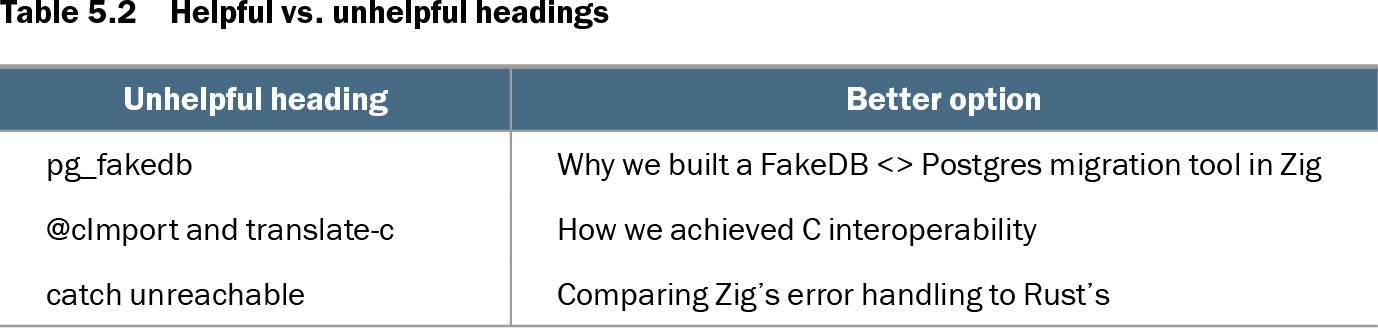
Table 5.2 Helpful vs. unhelpful headings (view table figure)
| Unhelpful heading |
Better option |
|---|---|
| pg_fakedb |
Why we built a FakeDB <> Postgres migration tool in Zig |
| @cImport and translate-c |
How we achieved C interoperability |
| catch unreachable |
Comparing Zig’s error handling to Rust’s |
Use reader-oriented headings after the introduction to reinforce its promised path, replacing unexplained implementation terms with questions and outcomes. section 5.2.3