Inventory is the quantity of products held and available for sale or use. It connects customer demand with supply: sales occur only when customers want a product and inventory is available. This distinction makes inventory a planning signal, not merely a stock target. section 2.2.1
The chocolate ice-cream trap
An ice-cream truck is out of chocolate ice cream. Tomorrow’s recorded sales will be zero, but children may still want chocolate ice cream. Reordering from the zero-sales forecast perpetuates the shortage: no inventory produces no sales, which produces no replenishment. A demand forecast should estimate what customers want, rather than merely repeat what constrained inventory allowed them to buy. section 2.2.1
Use inventory information to interpret sales and avoid misleading planning signals:
- Compare inventory availability with sales over time; sales and demand are equivalent only when shortages are absent. section 3.2
- Mark out-of-stock periods so forecasting models do not interpret constrained sales as weak demand. section 3.2
- Question inventory records when shelves are empty, stock counts are inaccurate, or product quality prevents customers from buying. section 3.2
- Avoid speculative stock accumulation: oversized orders can leave one supply-chain node with excess inventory while others face shortages. section 4.2.4
Figure 2.2 Demand, supply, and sales
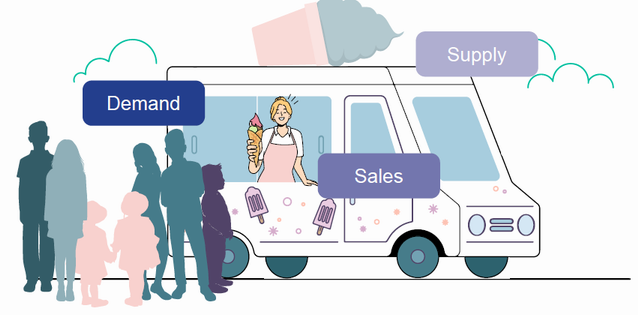
Use the demand, supply, and sales figure to distinguish customer desire, available inventory, and completed transactions. section 2.2.1
