liveBook · Manning

Isinstance

As explained in Software Engineering for Data Scientists

isinstance is a Python built-in function that tests whether an object is an instance of a specified class or tuple of classes.

isinstance checks whether a variable has a specified data type and returns True or False. Unlike type hints, which communicate intended inputs without enforcing them, isinstance can validate arguments before a function continues. section 3.4

Validate function inputs

A function that adds integers can check its arguments and raise TypeError when validation fails: def add_v2(a: int, b: int) -> int: if not isinstance(a, int) and not isinstance(b, int): raise TypeError("Inputs must be integers") return a + b This makes the input requirement explicit instead of allowing values such as strings to be concatenated. section 3.4
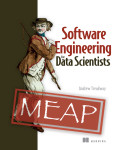
How Software Engineering for Data Scientists covers it

How deep it goes
Explains the two arguments and Boolean result, then demonstrates validation with TypeError; it does not develop deeper runtime internals.
Examples
Demonstrates unrestricted string addition, integer type hints, and an add function that raises TypeError after validation.
What it assumes
Assumes basic Python functions and data types while teaching type hints and explicit runtime checks together.
What you can do after
Diagnose invalid function inputs by checking their data types and raising TypeError when validation fails.
How it connects
Connects isinstance to type hints, functions, data types, and TypeError handling.

Also explained in

Compare how 3 books explain isinstance →

Related concepts

This explainer was generated by Manning's knowledge graph from the text of Software Engineering for Data Scientists. The section links point to the parts of the book it draws on.