An IT system organizes and processes information for a business or other domain. A typical information system combines a frontend, a backend, and a database: the frontend presents information, the backend handles requests and business logic, and the database stores persistent information. section 1.4
A backend commonly divides responsibilities across:
- A Controller receives requests, converts them into commands, and coordinates work. section 1.4
- A domain Model represents business rules through collaborating classes. section 1.4
- Database access retrieves, inserts, updates, or deletes the information used by backend actions. section 1.4
- External services and APIs extend the system’s capabilities and allow other applications to use it. section 1.4 section 1.5
PeopleGrow!
PeopleGrow! manages employees, training courses, learning paths, course offerings, enrollment, trainers, and reports. Its frontend supports administrators, while APIs let other applications enroll employees. The backend also connects to company chat and calendar systems for messages, notifications, and invitations. section 1.5
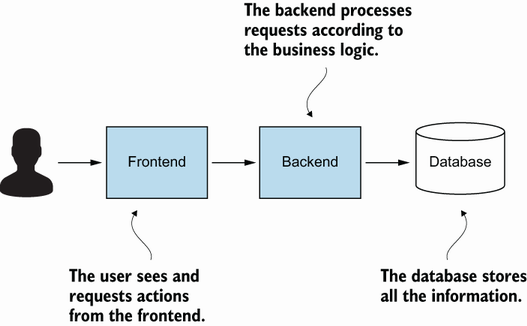
Use the architecture diagram to trace how a frontend, backend, and database cooperate within an information system. section 1.4
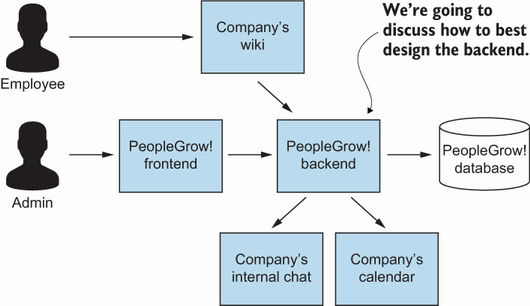
Use the PeopleGrow! architecture diagram to inspect the relationships among its frontend, backend, database, APIs, and external company systems. section 1.5

