A keyword is a word or phrase that connects an article with what readers search for. Choose terms from the question or problem your article addresses, then use them naturally where readers and search systems can find them. section 5.4.1
Use the reach-and-relevance test:
- Choose three to five priority terms: usually one broad term and one to three qualifying terms. section 7.4.1
- Ask what readers might search while trying to learn about the topic or solve its problem. section 5.4.1
- Place keywords naturally in the title, headings, introduction, metadata, URL, tags, and meta description when appropriate. section 7.4.1
- Favor terms that balance broad reach with precise relevance; do not pander to search engines or force awkward wording. section 5.4.1 section 7.6
Choosing between similar terms
For an article about a Kafka-like tool, compare “streaming data” with “event streaming” in Google Trends. The example finds higher worldwide interest in “streaming data” over the past five years, while related queries suggest further topics. section 7.4.1
Figure 7.6 Google Trends result for comparing interest in two similar search terms: event streaming and streaming data. There seems to be significantly higher interest in streaming data.
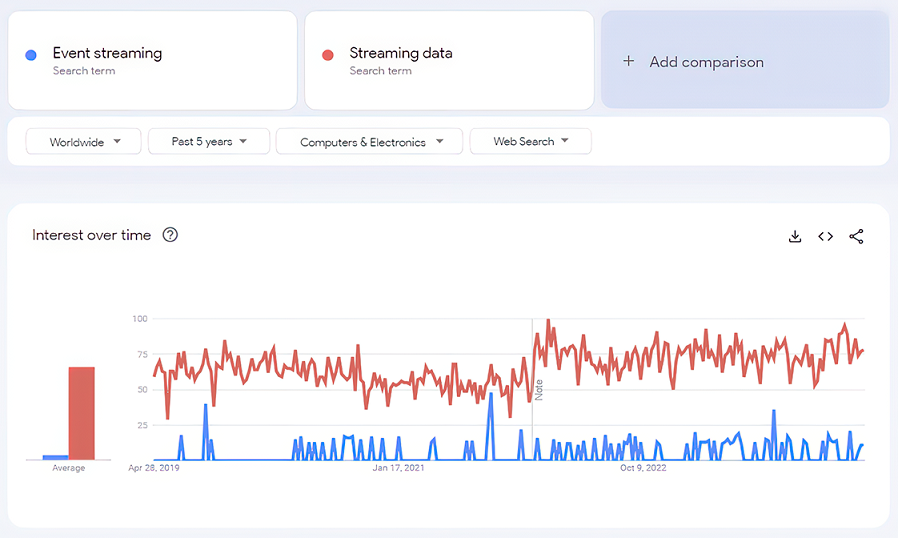
Inspect the comparison of “event streaming” and “streaming data” before choosing between similar keywords. section 7.4.1


