A knowledge management technique turns scattered learning into a practice: gather knowledge, internalize it, connect related ideas, retain what matters, and act on it. section 2.0
A journal as a thinking system
Seneca used daily writing to examine his actions, connect ideas from competing philosophies, and preserve insights for future readers. The same habit can help a programmer turn a fleeting debugging insight into reusable knowledge. section 2.0
The technique serves several connected purposes:
- Examine actions and mistakes rather than letting them disappear into memory. section 2.0
- Connect ideas across writers, disciplines, and intellectual disagreements. section 2.0
- Retain useful knowledge by giving it a durable written form. section 2.0
Figure 2.1 Niklas Luhmann in his home office, consulting his notes. Photo © Michael Wiegert-Wegener / University Archives Bielefeld.
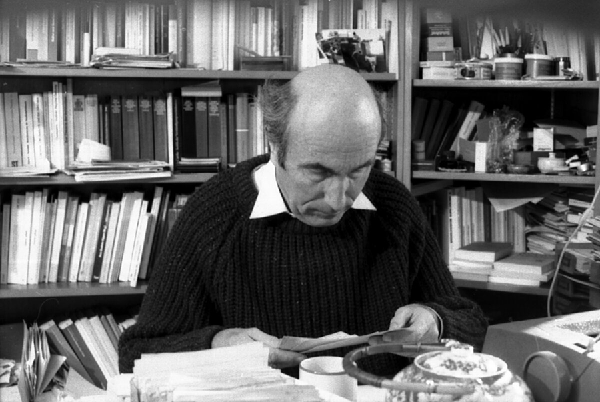
Consulting an organized note collection makes the technique visible as an ongoing practice rather than a single act of recording. section 2.0
