liveBook · Manning

LangGraph

As explained in The Art of AI Product Development

A framework for building stateful AI agents and graph-structured workflows with support for complex interactions.

LangGraph is a framework for building sophisticated, stateful AI agents. Its graph-based architecture supports flexible workflows, complex interactions, state management, and multi-turn conversations, while integrating with LangChain. section 9.2.3

Evaluate LangGraph as both a capability and an engineering trade-off:

  • Use graph-based workflows when agents must preserve state or manage complex interactions across turns. section 9.2.3
  • Compare its abstraction and overhead with alternatives before committing, since agent frameworks can reduce code flexibility and create lock-in. section 9.2.3
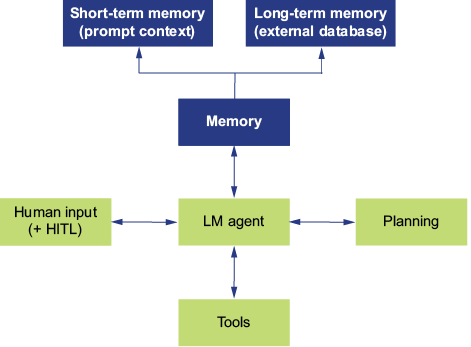
Figure 9.14 Agents need short-term memory for the current session and long-term memory for learning and improvement over time.
A diagram of a computer process

AI-generated content may be incorrect.

Use the memory distinction to relate LangGraph’s stateful agents to short-term session context and longer-term learning or improvement. section 9.2.3


How The Art of AI Product Development covers it

How deep it goes
Defines graph architecture and key capabilities but stops short of implementation detail.
Examples
Illustrates state management, multi-turn conversations, and LangChain integration as representative capabilities.
What you can do after
Build stateful AI agents with graph-based workflows, state management, and multi-turn conversations.
How it connects
Connects state management and multi-turn conversations with AI agents, graph-based workflows, and LangChain.

Also explained in

Compare how 7 books explain LangGraph →

Related concepts

This explainer was generated by Manning's knowledge graph from the text of The Art of AI Product Development. The section links point to the parts of the book it draws on.




