Prefix a method or attribute with one underscore to signal that it is intended for internal, non-public use. Python does not enforce this boundary: outside code can still access the member. section 8.3.1
Hide an implementation method from normal suggestions
class Note: def _format_note(self): return "formatted note" def save(self): return self._format_note() Name the helper _format_note when callers should use save instead. IDE autocomplete can omit the underscored method for outside users while retaining it within the class. section 8.3.1
Use the convention to make intent clear and keep interfaces easier to navigate:
- Prefix methods that users do not need to call directly, such as _format_note. section 8.3.1
- Apply the same convention to attributes when they are intended for internal use. section 8.3.1
- Do not confuse the convention with access control: the underscored member remains available if someone explicitly refers to it. section 8.3.1
- Distinguish this use from underscores in unpacking, where _ marks an unwanted item rather than a nonpublic class member. section 4.4.3
Figure 8.4 Different autocompletion hints provided for the instance object. It’s less desirable if the autocompletion hints include functions that users don’t need to use—in this case, the format_note method.
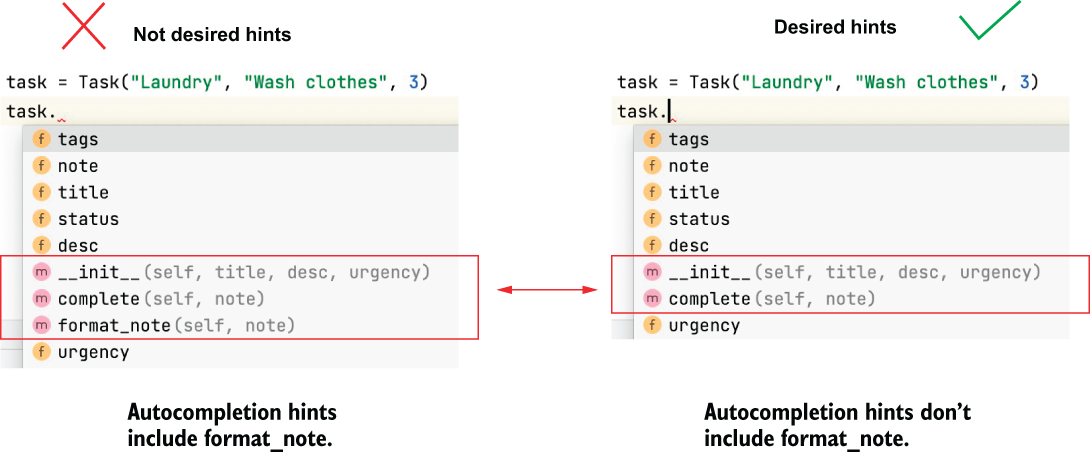
Compare autocomplete suggestions that include a public format_note method with suggestions that omit its underscored form. section 8.3.1

