Lean manufacturing is a production approach that minimizes waste and work not directly contributing to customer value.
Lean manufacturing minimizes waste and work that does not contribute to customer value. In software, its techniques support efficient product development that can adapt to customer feedback. section 1.1
Build for the actual journey
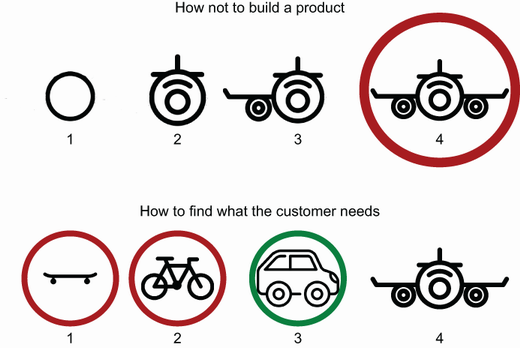
If someone needs to travel ten miles, spending years designing an airplane may be wasted effort. First clarify what the customer needs, then match the work to that need. section 1.1
Figure 1.1 Talk with customers to get an accurate idea of which product to build them.
A customer conversation helps identify what product to build before investing effort. section 1.1
How Shipping Go: Develop, deliver, discuss, design, and go again covers it
How deep it goes
Introduces lean's industrial roots and customer-feedback rationale, but does not detail specific techniques.
Examples
Uses an airplane designed for a ten-mile trip to show why effort should match the actual need.
What you can do after
Evaluate how much effort to invest by clarifying the customer's actual need before building.
How it connects
Links lean manufacturing to customer feedback, product development, and process automation.
Automating API DeliveryLean thinking is a management and improvement approach that maximizes customer value while minimizing waste and pursuing continuous improvement.
wasteuses · Waste is activity or resource consumption that does not contribute useful value to an intended product, process, customer, or organizational outcome.
A3 reportuses · A3 is a structured Lean problem-solving method and concise report for analyzing an issue, planning countermeasures, and communicating progress.
behavior-driven developmentused by · Behavior-driven development is a collaborative software development practice that specifies and verifies desired behavior through examples expressed in terms understandable to stakeholders.
This explainer was generated by Manning's knowledge graph from the text of Shipping Go: Develop, deliver, discuss, design, and go again. The section links point to the parts of the book it draws on.