Learning objectives name the tasks you aim to complete as you build a skill. Planning them weekly can support timeboxing without assuming every day will go to plan. Aim to achieve at least 70% of your goals; ambitious goals can inspire you, but missing some need not be a reason to give up. section 3.1.4
A developer’s example objectives turn learning into concrete tasks:
- Create a GitHub repository. section 3.1.4
- Build a simple website with a heading, paragraph, and dropdown; then style its elements with CSS. section 3.1.4
- Commit the completed website to the repository. section 3.1.4
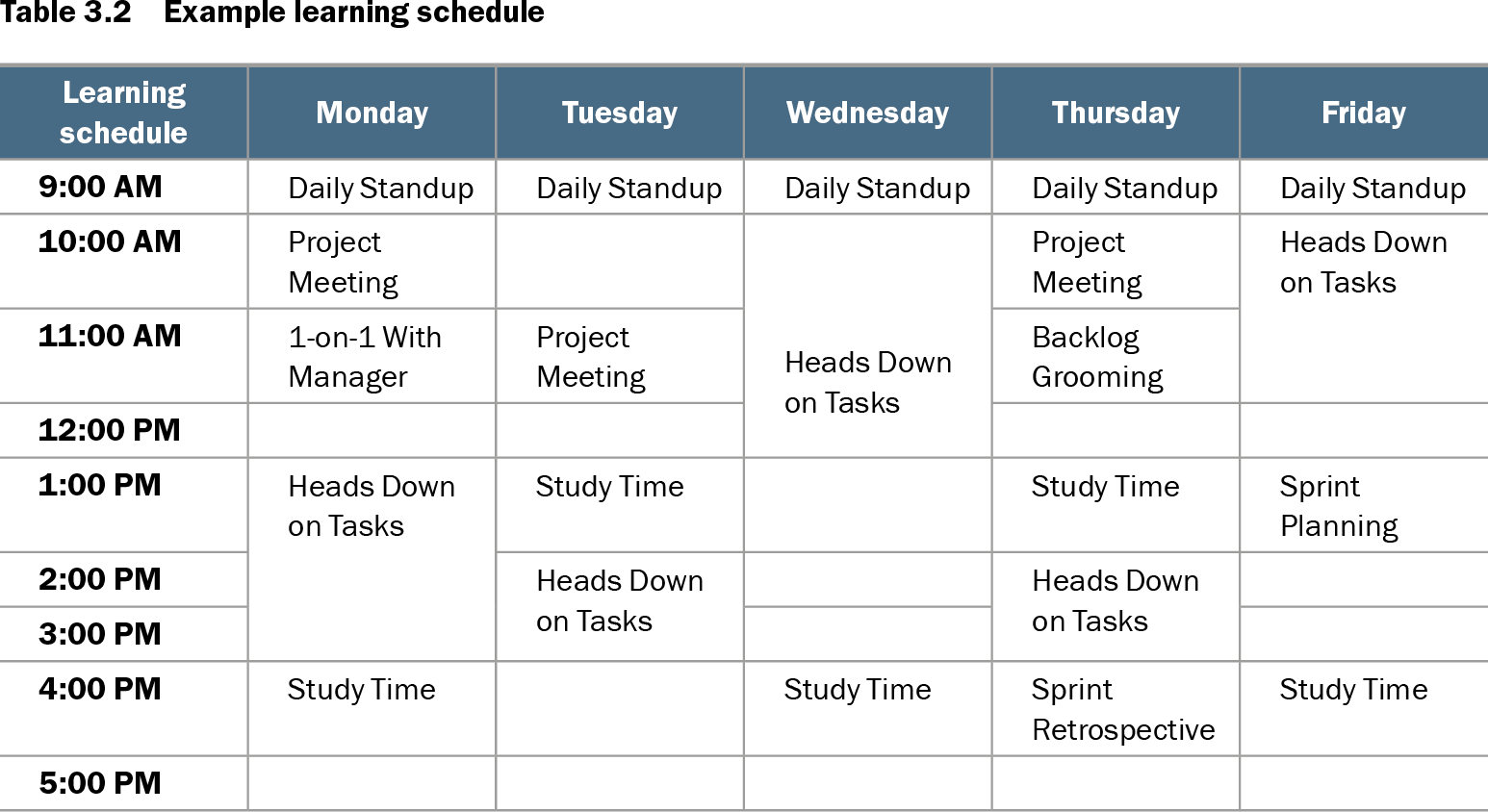
Table 3.2 Example learning schedule (view table figure)
| Learning schedule |
Monday |
Tuesday |
Wednesday |
Thursday |
Friday |
|---|---|---|---|---|---|
| 9:00 AM |
Daily Standup |
Daily Standup |
Daily Standup |
Daily Standup |
Daily Standup |
| 10:00 AM |
Project Meeting |
Heads Down on Tasks |
Project Meeting |
Heads Down on Tasks |
|
| 11:00 AM |
1-on-1 With Manager |
Project Meeting |
Backlog Grooming |
||
| 12:00 PM |
|||||
| 1:00 PM |
Heads Down on Tasks |
Study Time |
Study Time |
Sprint Planning |
|
| 2:00 PM |
Heads Down on Tasks |
Heads Down on Tasks |
|||
| 3:00 PM |
|||||
| 4:00 PM |
Study Time |
Study Time |
Sprint Retrospective |
Study Time |
|
| 5:00 PM |
Example weekly calendar showing study time alongside recurring meetings and focused work. section 3.1.4