Lifelong learning is the ongoing development of skills and ways of working, not a training event before a modernization project. Teams need time to learn modern technologies, patterns, and practices and then apply them to real work. Without that opportunity, a new architecture can reproduce old assumptions and flaws. section 1.3 section 2.1.5
Figure 1.11 Architecture modernization is parallel streams of work (not phases) supported by continuous learning and upskilling.
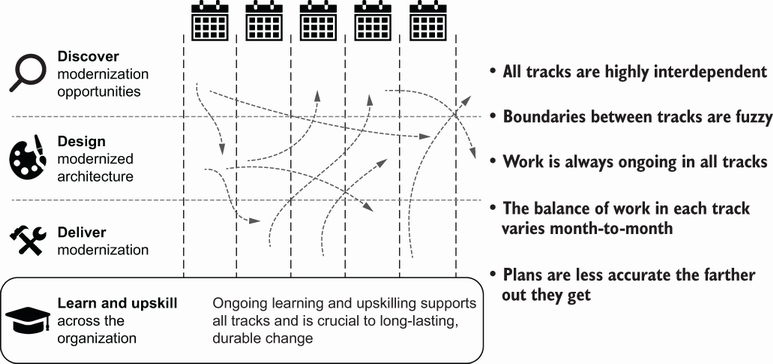
The diagram places continuous learning beneath parallel discovery, design, and delivery work. Learning supports the whole journey rather than occupying a single phase. section 1.3
For an upcoming project, identify the skills it calls for and compare them with what the teams can currently do. Make a learning plan with the teams, bringing in experienced help when they cannot yet judge the size of a skills gap. Start early where possible, but reserve time for experimentation during delivery: training alone does not produce proficiency. Leaders need to budget for that time as well as for formal training. section 17.2 section 16.2.1 section 2.1.5
Learning together before delivery
An organization adopting a serverless-first approach to moving from on-premises systems to the cloud brought in an AWS serverless expert to train cohorts across engineering. Including people not yet assigned to modernization helped them learn together and feel part of the journey. The cohorts addressed an immediate direction; teams would still need opportunities to use their new skills on projects. section 17.2
A lasting learning environment goes beyond project skills plans. Make room to explore ideas during working hours and to share what people discover through mentoring, communities of practice, blogging, talks, or internal conferences. One organization gave each employee two learning days per month, agreed with a team lead, followed by a short blog post. Such practices make learning part of ordinary work rather than an exception to it. section 17.3 section 17.5
Skills are social as well as technical. A technically capable lead, for example, may need support to shift from individual output toward coaching colleagues and improving team flow. Build trust, invite participation, and expect changes in habits to take time. Start with a small activity if necessary, then adapt it as interest and experience grow. section 15.4.1 section 17.5


