liveBook · Manning

Low-energy emotion

As explained in Data Storytelling with Altair and AI

A low-energy emotion is an emotional state involving reduced physiological arousal, calmness, or relaxation.

A low-energy emotion involves reduced physiological arousal and a sense of calm or relaxation. It often appears through slower movements, quieter behavior, reduced physical tension, contemplation, or introspection. section 8.1

Common low-energy emotions include:

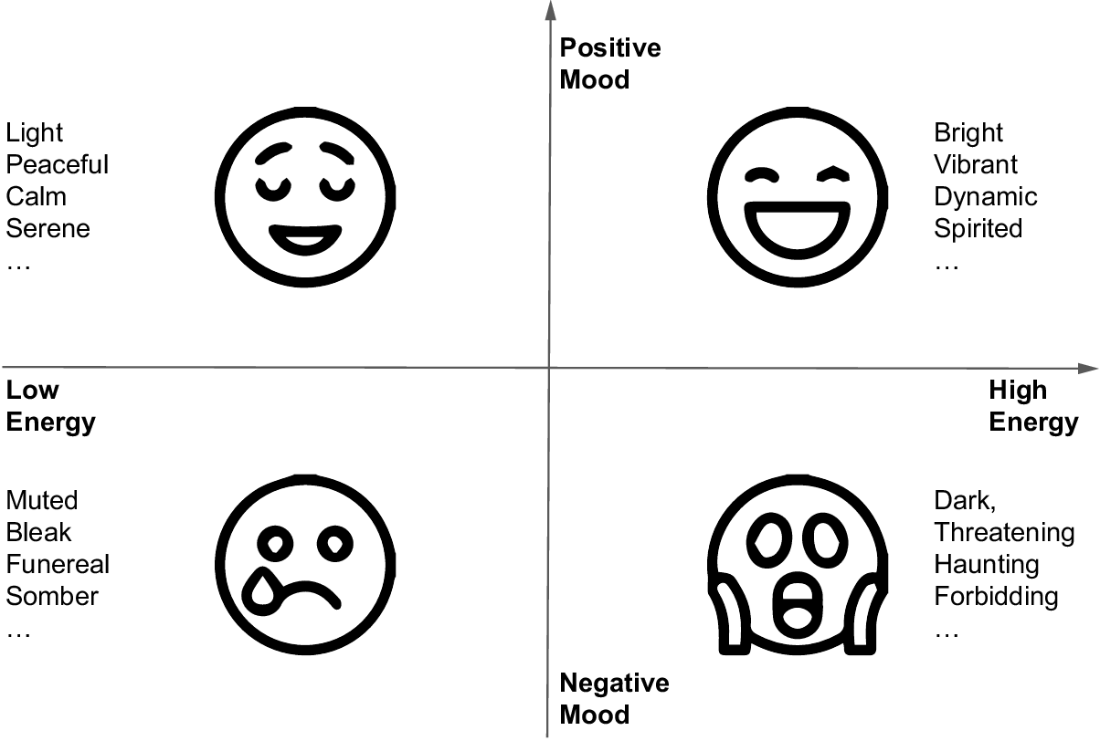
  • Contentment and tranquility, which reflect calm or relaxed states. section 8.1
  • Sadness, which combines low energy with a low mood. section 8.1
  • Low energy contrasts with excitement, anger, and fear, which are associated with heightened arousal and urgency. section 8.1
Figure 8.1 Macro categories for emotion classification
figure

Use the macro-category diagram to compare emotional states across energy and mood axes. section 8.1

How Data Storytelling with Altair and AI covers it

How deep it goes
Defines reduced arousal, observable expressions, and examples, stopping at classification rather than measurement.
Examples
Uses contentment, tranquility, and sadness alongside slower movements, quieter demeanor, and reduced physical tension.
What you can do after
Evaluate/understand emotions by energy level and distinguish calm states from heightened-arousal states.
How it connects
Connects physiological arousal with mood, emotional classification, visual context, and data storytelling.

Related concepts

This explainer was generated by Manning's knowledge graph from the text of Data Storytelling with Altair and AI. The section links point to the parts of the book it draws on.