Human emotions are feelings or affective states that visual elements can evoke or convey. In a data story, they help bridge raw data and human comprehension: visual stimuli influence perception, engagement, and what an audience remembers. The aim is not decoration, but a memorable context that makes people more open to the message. section 8.0 section 8.1
Use visual context intentionally. Colors, shapes, and layout can suggest emotional responses: warm reds and oranges may communicate excitement or urgency, while blues and greens may convey calmness or trust. Emotional effects vary with personal and cultural background, so treat these cues as audience-aware choices rather than fixed rules. section 8.1
Figure 8.1 Macro categories for emotion classification
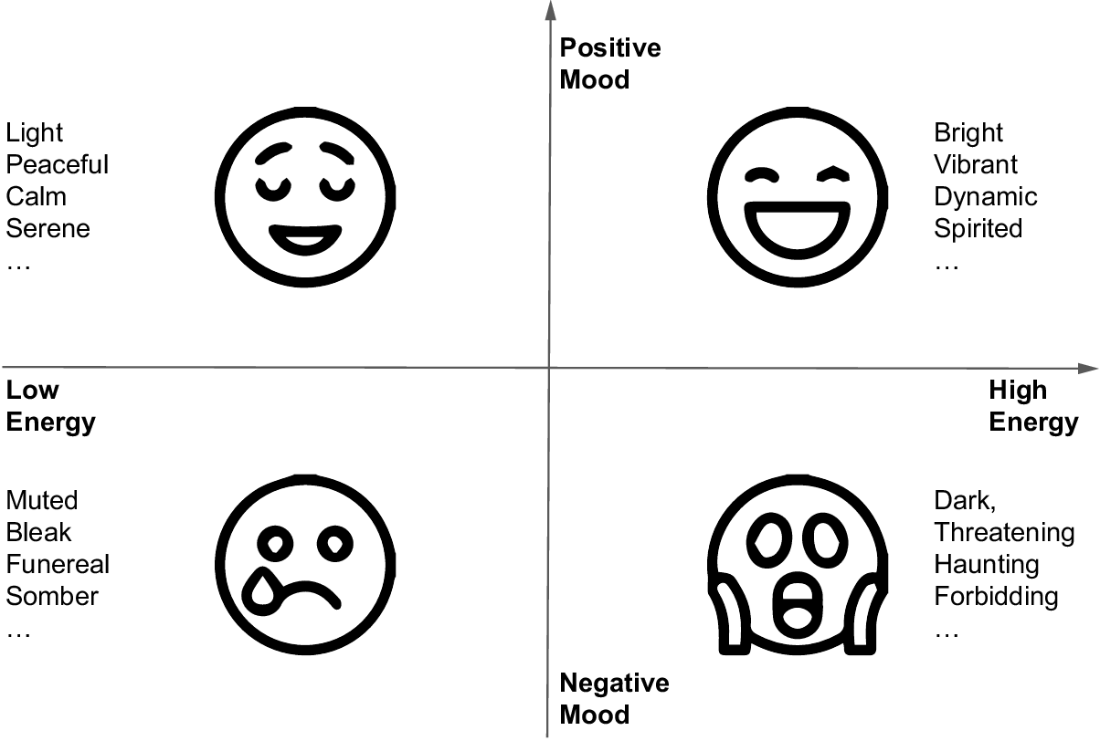
Classify the intended feeling by energy and mood before choosing visual cues. These two dimensions provide a broad way to distinguish emotional states and align a visual treatment with the response a story needs. section 8.1
Images can establish both a clear subject and an intended emotional level. A general description leaves audiences to imagine the subject differently; adding photos or generated images gives the story a more specific representation, reinforces context, and prepares attention for the data-driven message. section 8.5 section 4.3.1
Progressively specify an emotional image
Start with a generic prompt such as “a person.” Add a qualifying description, then an emotion, context, and color: “a sad, poor person wearing a torn brown shirt with rubbish in the background.” Each added element narrows the generated subject and strengthens the intended context. section 4.3.1
When generating emotional visuals for a data story:
- Name the subject specifically; generic subjects produce generic images. section 4.3.1
- Describe the subject’s emotion alongside context and color when those details support the intended representation. section 4.3.1
- Keep generated images consistent, then test whether the selected emotion is recognizable for the subject. section 8.5 section 8.5.3
