liveBook · Manning

Low-mood emotion

As explained in Data Storytelling with Altair and AI

A low-mood emotion is an emotional state associated with negative affective valence, sadness, anger, or anxiety.

A low-mood emotion carries negative valence and creates a somber mood, often appearing as sadness, anger, anxiety, fear, frowns, or visible distress. On the mood axis, it contrasts with high-mood emotions such as happiness and joy. section 8.1

In visual storytelling, low-mood emotions can encourage reflection and deeper contemplation rather than immediate excitement. Color choices should also preserve accessibility and understandable contrast. section 8.1

A reflective visual

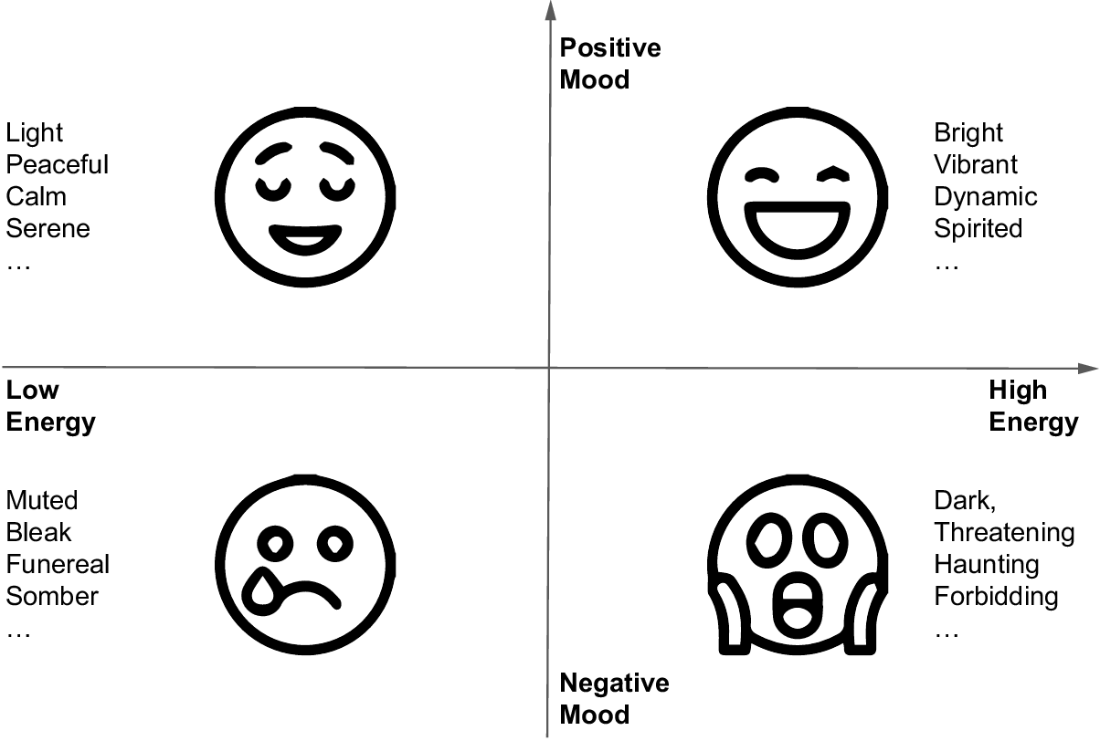
A visualization intended to prompt careful reflection might use visual cues associated with sadness, fear, or anger, while avoiding inaccessible color combinations. Emoticons can help communicate the relationship between mood and energy. section 8.1

Figure 8.1 Macro categories for emotion classification
figure

Use the emotion-classification figure to compare low-mood emotions with categories formed by combining mood and energy. section 8.1

How Data Storytelling with Altair and AI covers it

How deep it goes
Defines negative valence, lists recognizable expressions, and connects low mood with reflection without developing emotional measurement.
Examples
Uses sadness, fear, anger, frowns, distress, colors, and emoticons as concrete emotional or visual examples.
What you can do after
Apply it to align visual emotional cues with reflective communication while considering accessibility.
How it connects
Connects low-mood emotion with mood, energy, high-mood emotion, visual context, and data storytelling.

Related concepts

This explainer was generated by Manning's knowledge graph from the text of Data Storytelling with Altair and AI. The section links point to the parts of the book it draws on.