liveBook · Manning

High-mood emotion

As explained in Data Storytelling with Altair and AI

A high-mood emotion is an emotional state associated with positive affective valence, happiness, or optimism.

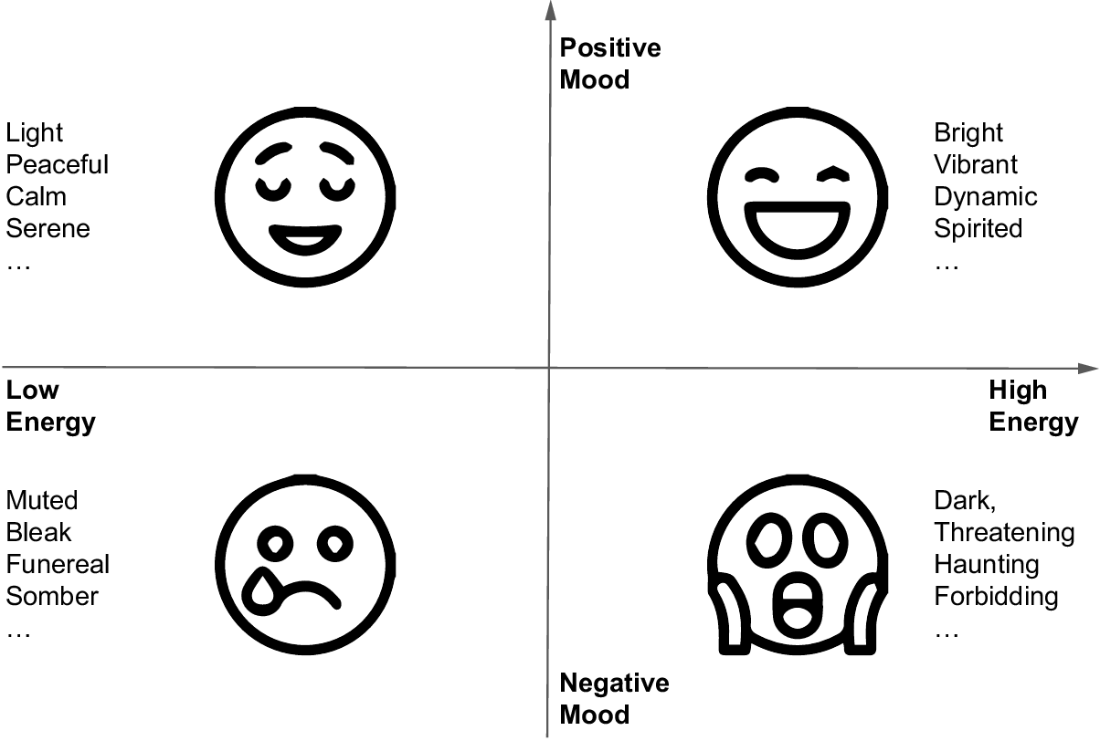
A high-mood emotion is associated with positive valence, happiness, joy, and optimism. It can produce smiles, laughter, and a general sense of well-being. Mood differs from energy: excitement combines high mood with high energy, while contentment represents positive mood with lower energy. section 8.1

Using mood in a data story

Use high-mood emotions to support an optimistic message and invite audience engagement. Pair the intended emotional effect with appropriate visual choices rather than treating emotion as decoration alone; high-energy emotions can capture attention, while lower-energy states can encourage reflection. section 8.1

Figure 8.1 Macro categories for emotion classification
figure

Compare high- and low-mood emotions with high- and low-energy states in the mood-energy classification. section 8.1

How Data Storytelling with Altair and AI covers it

How deep it goes
Defines positive valence and contrasts mood with energy, but stops short of physiological or psychological explanation.
Examples
Illustrates happiness, excitement, and love through smiles, laughter, and general well-being.
What it assumes
Assumes familiarity with emotions and visual communication while defining mood and energy through contrasting categories.
What you can do after
Evaluate emotional intent in visual content and align it with attention, curiosity, optimism, or reflection.
How it connects
Connects positive valence with happiness, optimism, high-energy emotions, low-energy emotions, and visual context.

Related concepts

This explainer was generated by Manning's knowledge graph from the text of Data Storytelling with Altair and AI. The section links point to the parts of the book it draws on.