A low-fidelity wireframe is a rough, minimally detailed page layout. Shapes stand in for images and text, while spacing, color, and typography remain unresolved. Its purpose is to communicate basic interaction and functionality quickly, before detailed design makes changes expensive. section 5.3.1
Use low-fidelity wireframes to:
- Explore page ideas rapidly with pen and paper or digital tools. section 5.3.1
- Check whether a layout and user flow work before investing in color, typography, or detailed visual design. section 5.3.1 section 11.0
- Align users, stakeholders, and teammates around the basic direction of a page or application. section 5.3.1
- Prioritize detail for the pages that need it most when a site has many screens. section 5.3.1
A rough home-page structure
Sketch a hero area as a large rectangle, place simpler blocks beneath it for supporting content, and use basic marks for text and images. Review whether the structure communicates the intended path before refining the wireframe. section 5.3.1
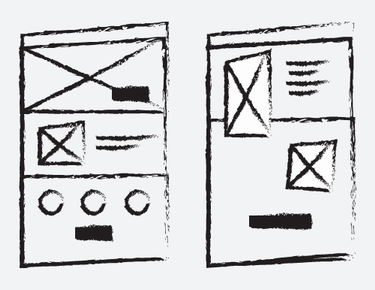
Use the figure to see how minimal shapes can communicate a general page idea without detailed visual styling. section 5.3.1
