Machine learning engineering builds ML systems that remain reliable, maintainable, and operational from experimentation through deployment. It connects models, data, code, and platform processes into production workflows rather than treating a trained model as a standalone artifact. section 1.0
The central operating model is an iterative ML life cycle. Teams define a stakeholder-aligned problem, collect data, build and test models, deploy them, and repeat as assumptions, methods, customer needs, or surrounding conditions change. section 2.1 section 1.0
Production-oriented engineering emphasizes:
- Robust workflows that standardize model changes and preserve developer velocity across teams. section 2.1
- Separate tracking for model weights and networks, code, architecture, and supporting artifacts. section 2.1
- A clear problem statement aligned with stakeholders before modeling or choosing evaluation criteria. section 2.1
- Operational concerns such as orchestration, validation, serving, monitoring, and explainability across the ML platform. section 1.0
Used-car price prediction
A dealership deploys a model to predict vehicle prices. As market conditions and customer needs change, the workflow supports new model versions, including versions for commercial and industrial vehicles, without losing focus on business value. section 2.1
Figure 2.2 ML as a loop
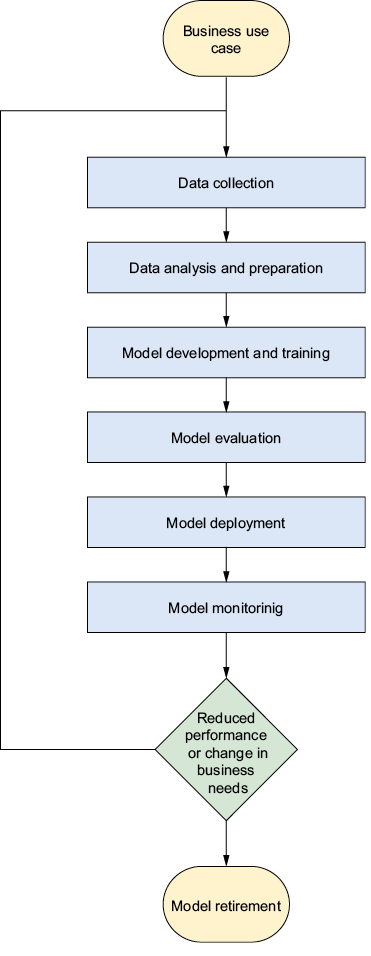
Use the ML-as-a-loop figure to navigate the recurring path from problem definition and data collection through model changes and deployment. section 2.1

