Code maintainability is the capacity of a codebase to remain clear, readable, stable, understandable, and safe to modify. Human-centered code reviews improve maintainability by catching ambiguity, encouraging human-friendly code, and reducing future debugging effort, defects, and maintenance cost. section 1.3.1 section 3.1.2
Make maintainability a deliberate code-review goal by checking:
- Complexity, consistency, scalability, coding conventions, team standards, and code smells. section 3.1.2
- Accompanying unit tests, relevant edge cases, and how each isolated change fits into the larger system. section 3.1.2
- Team agreement about what maintainability means, since the definition and priorities differ across teams. section 3.1.2
- Review coverage and participation, because omitted or laxly reviewed changes allow defect-prone code to reach releases. section 1.3.1
A maintainability-focused review process
Start by making codebase stability and maintainability the team’s first review goal. Reinforce practices that improve it, remove bottlenecks and counterproductive actions, and iterate until the behaviors become routine. Later, add recordkeeping by improving pull-request preparation, categorizing titles, using labels and links, and recording meaningful context. When reviewers disagree about clarity, keep the discussion professional, explain the reasoning behind each approach, seek middle ground, and choose the solution that makes sense to current and future developers. section 3.1.6 section 6.1.1
Figure 3.1 Choosing code review goals for your team
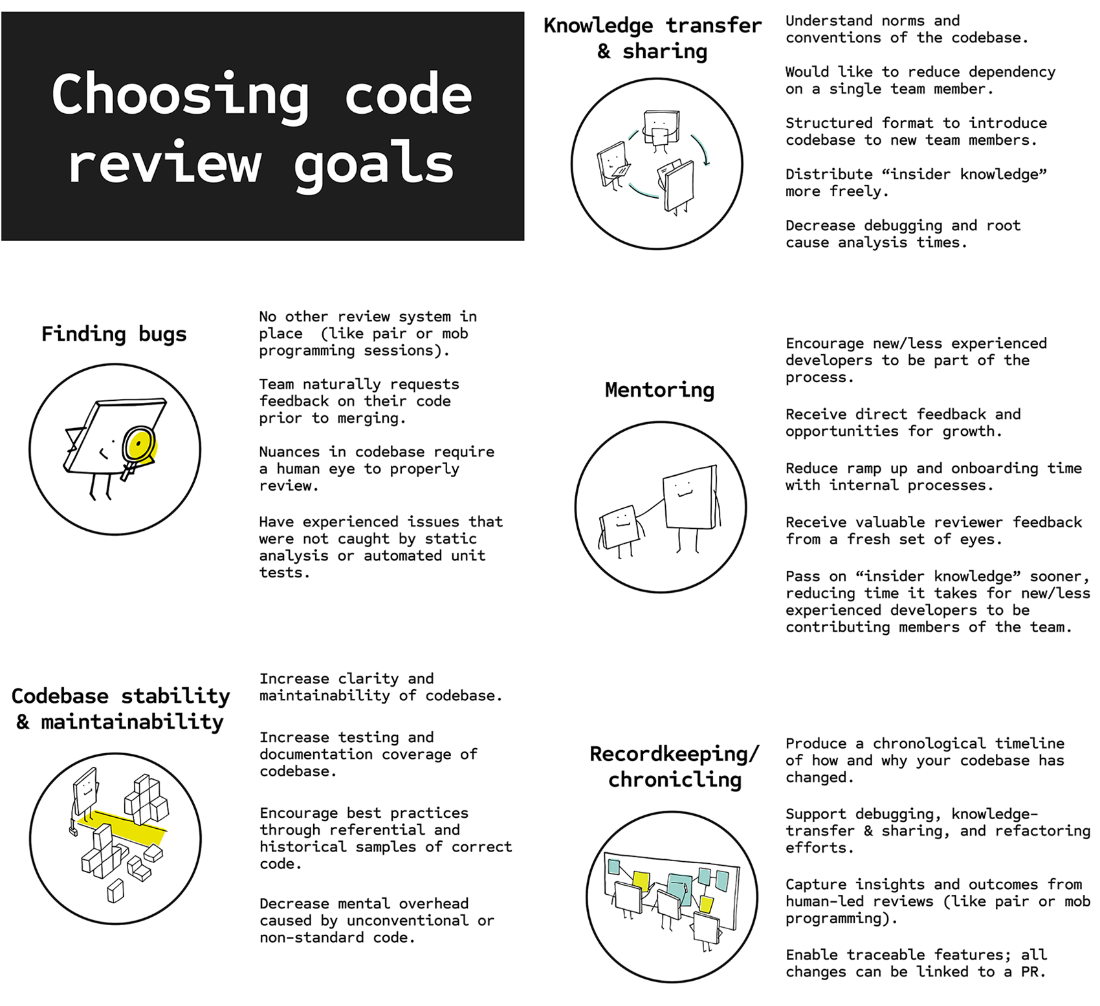
Use the decision figure to compare code-review goals and prioritize stability and maintainability when establishing a new process. section 3.1.6






