liveBook · Manning

Major change

As explained in Infrastructure as Code, Patterns and Practices: With examples in Python and Terraform

An infrastructure change that may affect system architecture, security, or availability and lacks well-defined implementation or rollback procedures.

A major change is an infrastructure change that may affect architecture, security, or availability and lacks well-defined implementation or rollback plans. New or unknown changes can produce unpredictable results, significant impact, and complex recovery steps. section 7.1.4

Treat a major change as a controlled delivery activity:

  • File an issue or ticket with justification and discussion. section 7.1.4
  • Update the infrastructure-as-code configuration and obtain skilled peer or organizational review. section 7.1.4
  • Require manual approval before applying the change to production, signaling its potentially large blast radius. section 7.1.4
  • After manual changes, reconcile the actual infrastructure state with the expected infrastructure-as-code configuration. section 7.1.4

Decommissioning a blue environment

Deleting a shared blue network is treated as a major change. First confirm that it has processed no requests or data, verify inactivity with a peer or change advisory board, point the load balancer to green, test that no blue resources remain referenced, and then remove the blue resources and unused IaC files. section 9.2.5
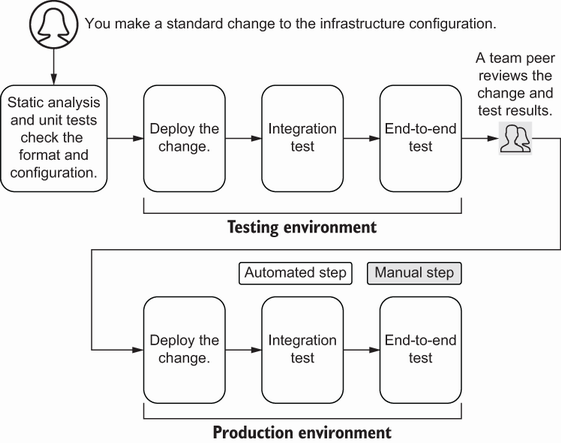
Figure 7.8 New or major changes should have manual peer approval before applying to production.

Shows the delivery pattern for major changes: manual peer approval precedes production application. section 7.1.4

How Infrastructure as Code, Patterns and Practices: With examples in Python and Terraform covers it

How deep it goes
Defines risks, approval requirements, reconciliation, and examples, but does not provide complete implementation or rollback procedures.
Examples
Uses IPv6, network CIDR, DNS, certificates, workload orchestrators, platform refactoring, and blue-environment deletion as examples.
What it assumes
Assumes familiarity with infrastructure as code, deployment pipelines, production environments, and peer review.
What you can do after
Evaluate infrastructure changes, categorize their risk, and route high-impact work through review and manual production approval.
How it connects
Connects major changes with infrastructure as code, continuous delivery, manual approval, peer review, and blue-green deployment.

Related concepts

This explainer was generated by Manning's knowledge graph from the text of Infrastructure as Code, Patterns and Practices: With examples in Python and Terraform. The section links point to the parts of the book it draws on.