A managed Kubernetes service lets a cloud provider operate the Kubernetes infrastructure while teams use a scalable platform without administering the underlying infrastructure. section 15.1
This is a practical alternative to building a cluster in a datacenter. Kubernetes adds complexity, but managed services reduce the operational burden and support applications ranging from microservices to legacy n-tier systems and replicated databases. section 15.1
The main reasons to choose a managed service are:
- Avoid administering cluster infrastructure while using a scalable Kubernetes platform. section 15.1
- Preserve vendor portability because Kubernetes services share the same core platform. section 15.1
- Reuse Kubernetes skills across applications and cloud providers. section 15.1
Figure 15.1 A multi-platform Kubernetes cluster can run containers of any kind.
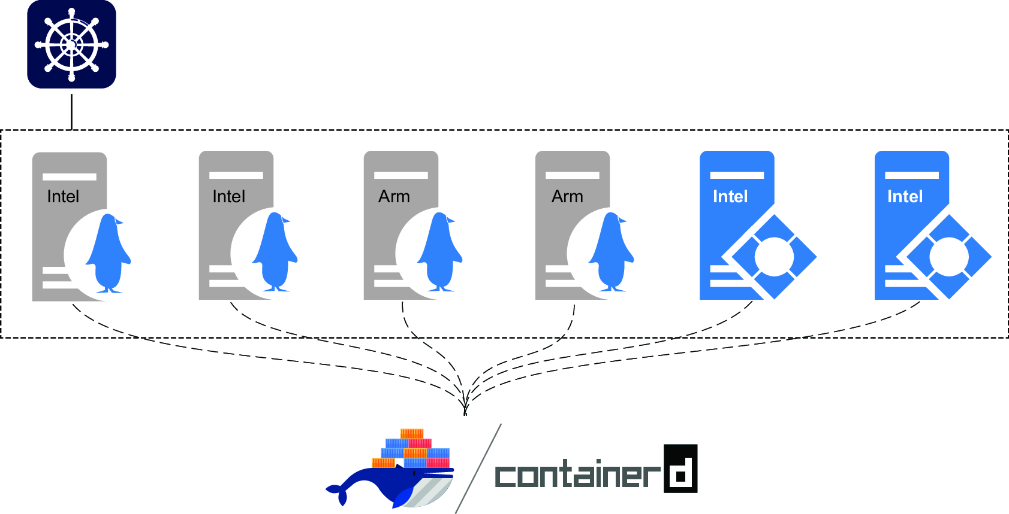
Use the cluster diagram to see how Kubernetes can group machines running containers across platforms. section 15.1

