A managed service is a provider-operated service that abstracts administration of software, infrastructure, and operational components. Higher-level services absorb more underlying layers and operational costs, increasing convenience and price. section 1.1.1
For a highly available PostgreSQL instance, the provider manages the database software, operating system, hardware, and monitoring tools. Teams trade direct control and operating effort for a service charge. section 1.1.1
A managed Kubernetes offering shifts cluster operations while introducing practical constraints:
- Provision real clusters through a self-service cloud account, scale resources for a task, and delete clusters when finished. section 2.1.1
- Budget caps and access controls become necessary because consumption is billed by the provider. section 2.1.1
- Remote environments can slow local workflows, but they also make development and deployed applications behave more like production. section 2.1.1
- Evaluate provider dependence and organizational policies before placing workloads or data in the cloud. section 1.1.1 section 2.1.1
Figure 1.1 Cloud provider’s services categories
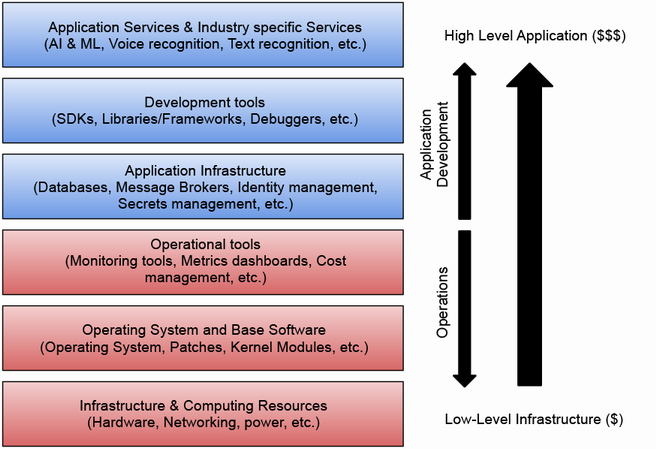
Use the service-category diagram to compare low-level infrastructure services with higher-level application services. section 1.1.1
Figure 1.2 Provisioning a PostgreSQL database instance in the cloud
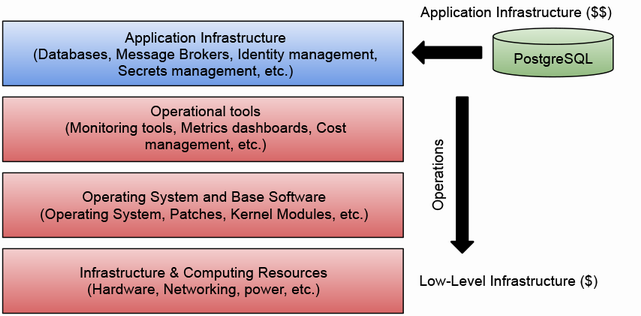
Use the PostgreSQL provisioning figure to inspect which database, operating-system, hardware, and monitoring responsibilities the provider absorbs. section 1.1.1


