Manual infrastructure configuration sets up and changes computing resources through direct human operations, such as console updates, commands, routing changes, and firewall edits. It can work for isolated tasks but becomes difficult to reproduce, audit, test, and coordinate as systems and teams grow. section 1.2.1 section 2.0
Manual changes create recurring operational problems:
- Misconfiguration can increase change failure rates and make troubleshooting difficult when commands and changes are not recorded. section 1.2.1
- Ticket-driven provisioning can delay development, as database creation, routing, and firewall changes wait on a platform team. section 1.2.1
- Accumulated console changes can expose systems, including through firewall rules left open after development work. section 1.2.1
Development database setup
A team waited nearly two months for a public-cloud database, routing, and firewall configuration because the platform team performed each task manually. Recreating production later required reverse-engineering the development environment. section 1.2.1 section 2.0
Figure 2.1 When you create a production environment based on the development, you must answer many questions about configurations for new infrastructure and reverse engineer the functionality of the development environment.
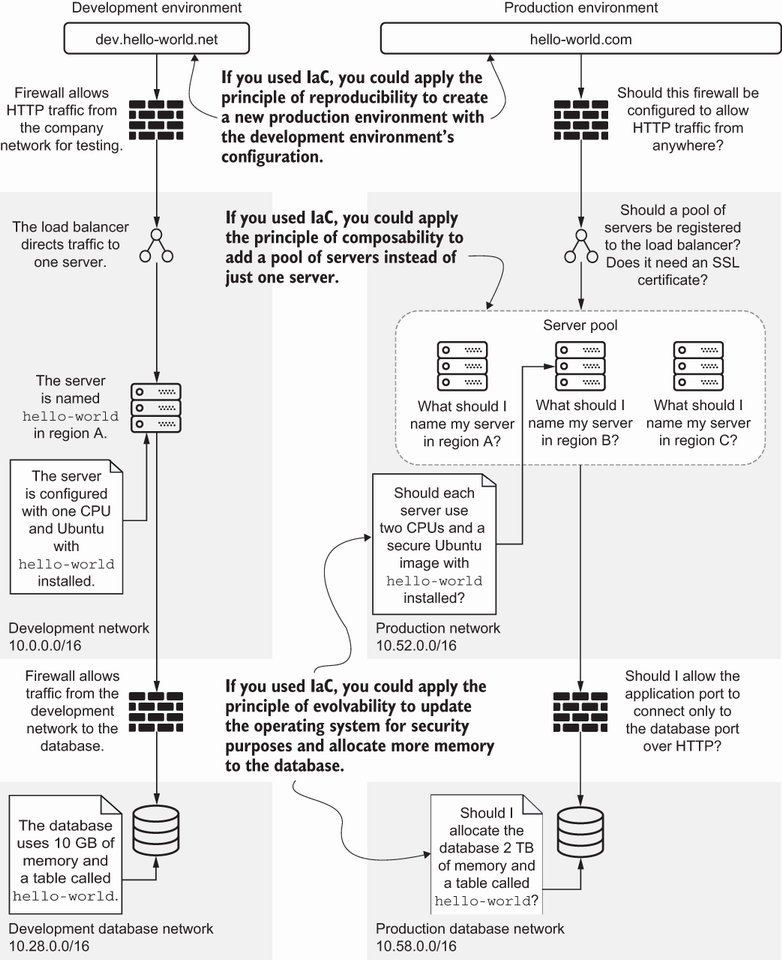
Compare development and production infrastructure to identify the configuration details that manual setup leaves implicit. section 2.0
