A markup language annotates ordinary text with codes that describe its structure, presentation, or meaning. HTML is a friendly example: its tags tell a browser where paragraphs, lists, images, and links belong. The browser then renders the page instead of displaying the instructions themselves. Despite the word language, HTML is not a programming language; it is a small vocabulary for describing web documents. section 1.1
Break the name into less scary pieces:
- Hypertext connects a page to another page through links. section 1.1
- Markup means adding detailed instructions to a text document. section 1.1
- Language means a compact collection of words—in HTML, tags—not a programming system. section 1.1
From plain text to a page
A browser can display a plain-text file, but the result may be difficult to read. Add markup, and the same information becomes easier to scan, navigate, and understand through paragraphs, lists, images, and links. section 1.1
Figure 1.1 The browser can display plain-text files, but they’re awfully hard to read.
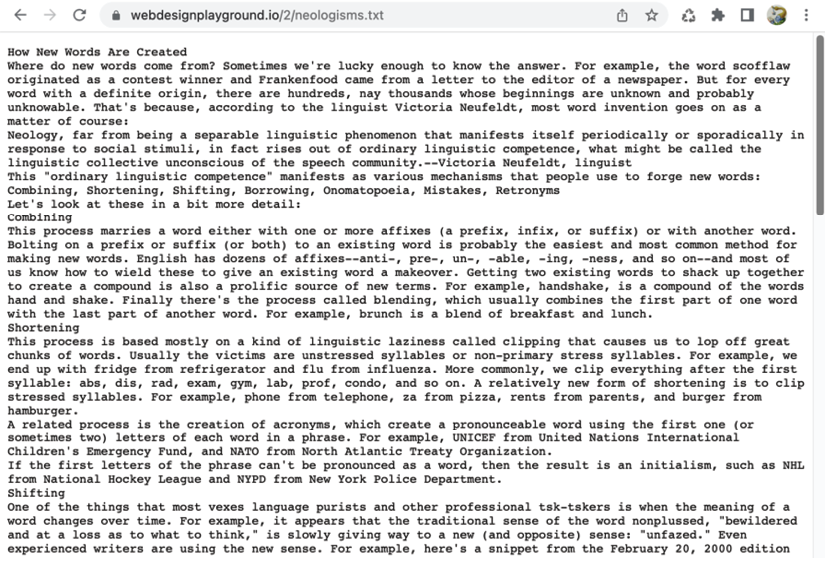
Compare an unstructured plain-text page with its marked-up counterpart to see what the browser gains from markup. section 1.1