liveBook · Manning

Maximum tolerable downtime

As explained in Think Like a CTO

Downtime tolerance is the maximum period of service unavailability an organization can accept during recovery.

Maximum tolerable downtime is the longest period an organization can accept without service during recovery. The target may be minutes, hours, or days, depending on client needs and the economics of disruption. section 8.4.1

Set the tolerance by answering:

  • Whether recovery requires full service or only partial service. section 8.4
  • Whether the organization will fail forward to a new primary or eventually return to the original environment. section 8.4
  • Whether the cost of near-continuous availability is justified by the consequences of downtime. section 8.4.1

Hot or cold standby

A hot standby keeps servers running and data continually synchronized, minimizing downtime but consuming power, bandwidth, and hardware lifetime. A cold standby costs less but requires machines to boot and synchronize after failover, making it slower yet acceptable for some situations. section 8.4.1
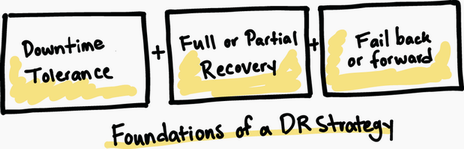
Figure 8.2 Foundations of a DR strategy

Use the DR foundations figure to place downtime tolerance alongside service scope, failover direction, and backup-zone choices. section 8.4
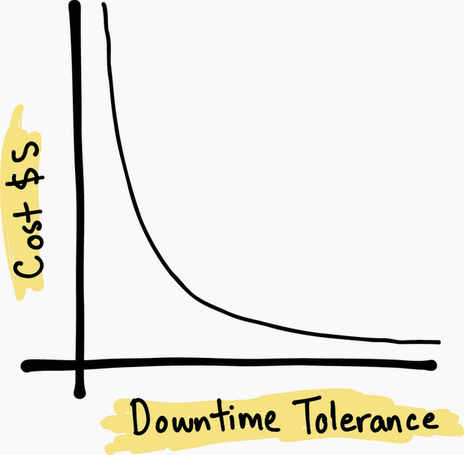
Figure 8.3 Downtime economics

Use the downtime economics figure to compare the financial consequences of tolerance levels and standby configurations. section 8.4.1

How Think Like a CTO covers it

How deep it goes
Compares minutes, hours, and days, then explains hot and cold standby trade-offs without specifying a universal target.
Examples
Uses active and backup zones plus hot- and cold-standby configurations to illustrate recovery-speed and cost choices.
What it assumes
Assumes responsibility for organizational technology and introduces recovery planning questions rather than requiring a predefined DR strategy.
What you can do after
Evaluate acceptable downtime against client needs, recovery requirements, infrastructure limits, and the economics of standby choices.
How it connects
Connects downtime tolerance with disaster recovery, failover, backup zones, hot standby, cold standby, and data synchronization.

Related concepts

This explainer was generated by Manning's knowledge graph from the text of Think Like a CTO. The section links point to the parts of the book it draws on.