A measure–change–measure cycle improves an agent by comparing its output with a standard, seeking a better version, and keeping the winner. Repeated search can update the agent and its harness without changing the underlying model. section 1.1.2 section 2.3.3
Each search pass has three moves:
- Propose a variant of the current best. section 2.3.3
- Measure the variant against the current best using the signal. section 2.3.3
- Select the variant only if the signal prefers it, then repeat from the best candidate so far. section 2.3.3
From feedback to iteration
When a user reports a wrong answer, an engineer might inspect the conversation, edit the prompt, redeploy, and wait for more feedback. That manual loop is slow and human-gated; repeated search instead measures and selects among proposed variants. section 1.1.2 section 2.3.3
Figure 2.8 The search process. Search is the self-improvement loop run repeatedly: Propose generates a variant of the current best, Measure has the signal compare that variant against the current best, and Select applies the verdict, keeping the variant only when the signal preferred it. The signal does its work in Measure; Select is just the decision rule, with no second call to the signal. After the rounds run out, the best candidate becomes the new artifact.
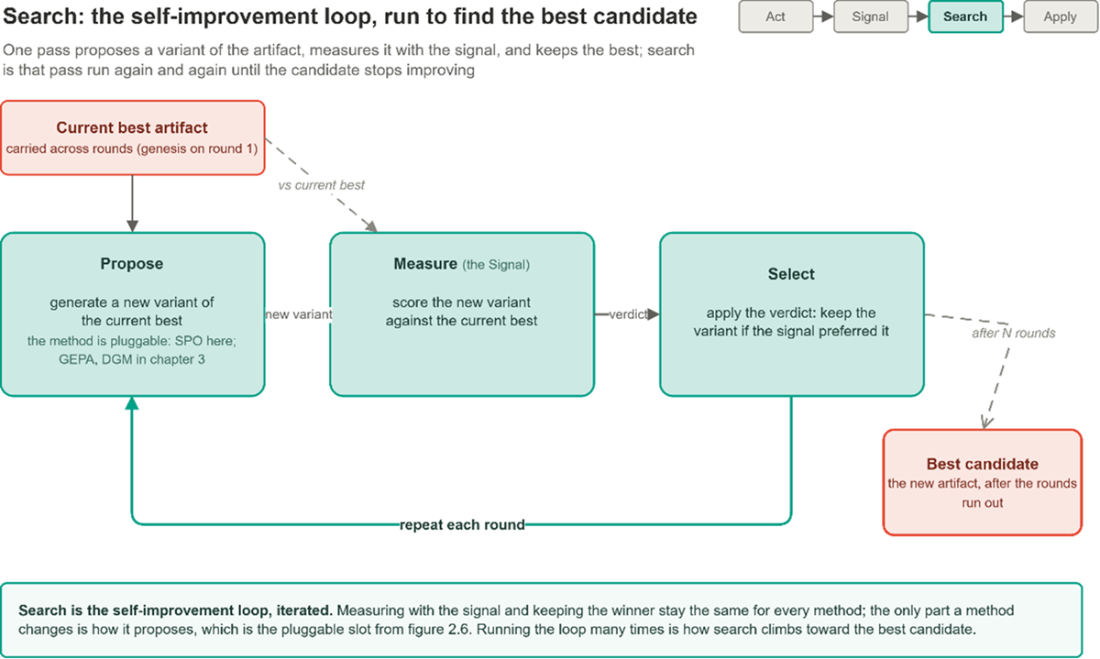
Trace how proposal, measurement, and selection repeat until the remaining candidate becomes the new artifact. section 2.3.3