A memory module stores potentially useful information from an agent’s task execution and makes some of it available in the context for future tasks. Reusing past results can avoid repeating tool calls. section 1.4
A typical memory flow follows the agent’s processing loop:
- At task start, check memory and load information that may help with the current task. section 1.4
- During execution, save results from sub-steps and tool calls, along with the final task result. section 1.4
When and what to load or save are design decisions. A framework’s memory module can provide infrastructure and recipes for episodic memory. section 1.4 section 1.7
Figure 1.8 A mental model of the LLM agent processing loop that has memory modules for saving and loading important information obtained during task execution.
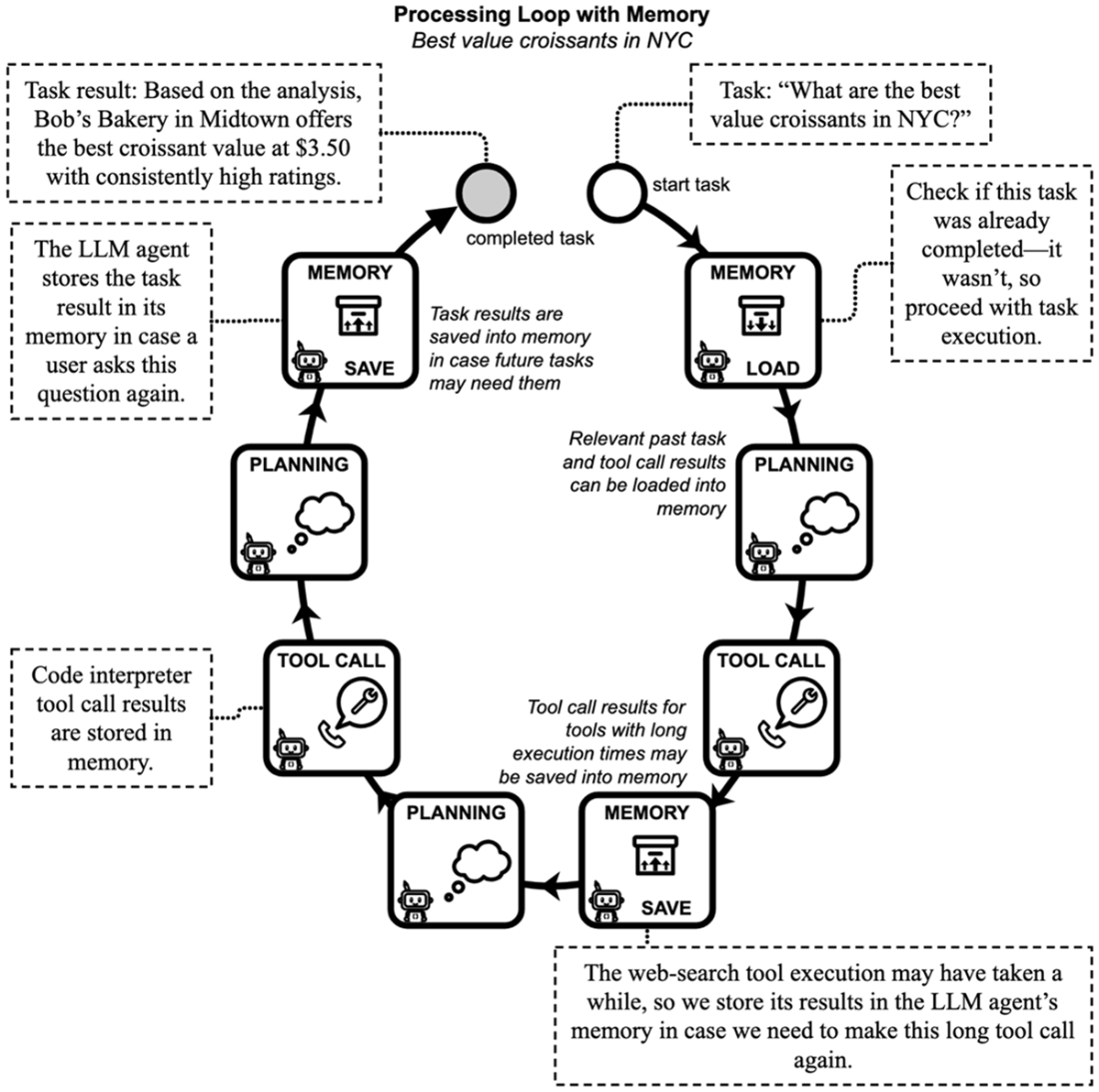
The processing-loop diagram illustrates where memory loads and saves fit into task execution. section 1.4