A mentor network is a deliberately cultivated group of mentors whose different backgrounds, expertise, and experiences support your growth. Multiple perspectives reduce the risk of copying one person’s path and help you match guidance to your goals, role, and challenges. section 12.2.1
Build a useful mentor network by:
- Clarifying your career aspirations, current responsibilities, and areas where you need guidance. section 12.2.1
- Seeking people whose expertise aligns with those needs rather than looking for one ideal mentor. section 12.2.1
- Finding contacts through industry events, social media, developer communities, training programs, workshops, and online courses. section 12.2.1 section 12.1.1
- Researching a potential mentor’s background and contributions before making the first contact. section 12.2.1
- Using shadowing relationships to observe leadership, compare your responses, identify skill gaps, and learn from difficult situations. section 12.1.1
Learning through a wider network
A developer preparing for a lead role shadows an experienced lead during a difficult production deployment, reflects on the decisions made under pressure, and then connects with additional leads through developer communities to broaden the guidance available. section 12.1.1 section 12.2.1
Figure 12.3 How to gather a group of mentors
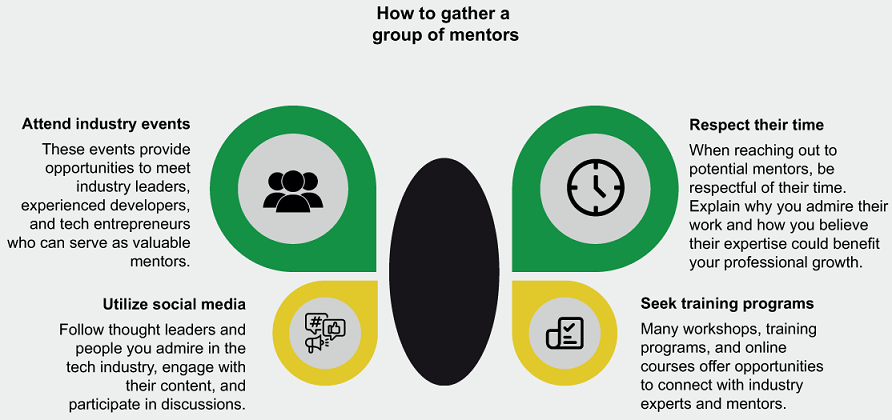
Use the mentor-gathering figure as a visual checklist for expanding contacts and approaching potential mentors. section 12.2.1
