An online community is a group connected through shared interests and online communication. For technical work, choose communities for relevance, discussion quality, frequency, and civility rather than audience size alone. section 2.3.2 section 15.2
Use this practical pattern when joining or sharing in a community:
- Start small. Find one or two focused, well-moderated communities and observe their discussions before investing significant time. section 2.3.2
- Contribute before promoting. Become a useful participant instead of treating the community as a write-only channel for announcements. section 15.2.2 section 15.9
- Share in phases. Begin with your own social channels, use early feedback to revise your approach, and then move toward larger or less focused communities. section 15.2.2 section 15.9
- Join the discussion honestly. Seed useful posts into relevant conversations, respond constructively, and leave unproductive attacks rather than trying to game attention. section 15.2 section 15.9
- Keep contributing after promotion. Continue participating, look for later discussions where the post belongs, and watch for people mentioning it. section 15.2.2 section 15.9
A cautious sharing sequence
After publishing a technical article, share it first with your existing contacts when they are likely to respond. Use the quick feedback from a short-lived social platform to improve the message, then share it in a focused community. Consider Hacker News later, after learning its advanced search and recognizing that its front page mixes highly diverse topics. section 2.3.2 section 15.2.2
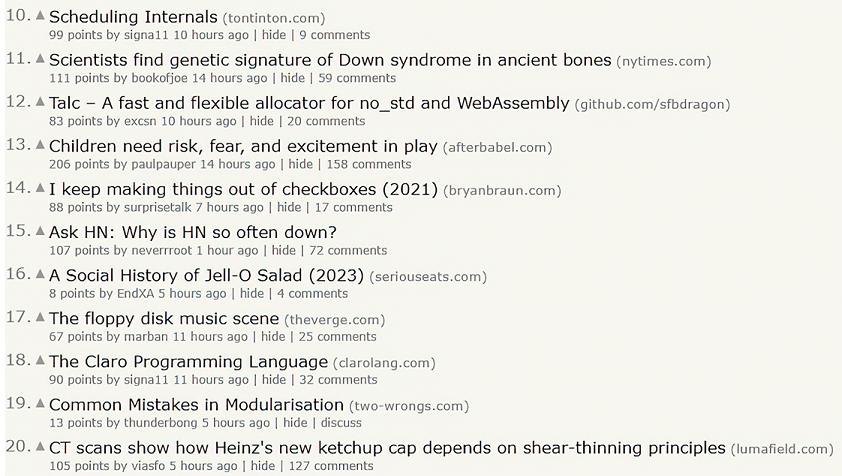
Use the figure to see why Hacker News requires careful expectations: its front page can place a strong engineering article beside unrelated cultural or personal discussions. section 2.3.2
